

Heroic Lentils, Two Ways: With Pork or Salmon, Plus Proudly Canadian Wine Pairings
- Jan 17
- 16 min read
Updated: Apr 4
I did promise that foie gras was strictly a decadent New Year’s Eve affair, and that January would return us to a more austere table. I am nothing if not a woman of my word. Like many of us, I also religiously eat lentils on January 1st, in the hopeful belief that they usher in money and prosperity for the year ahead.
So far, the results have been… theoretical.
But traditions, like good wine and bad habits, deserve loyalty, so we persist.

When I make lentils, I make enough to last at least a couple of days, because anything less feels like a missed opportunity. I slow-simmer the little bastards until they’re deeply savoury, properly seasoned, and endlessly adaptable, the kind of base that quietly improves everything it touches. Over the next few days, they shape-shift: a side one night, a base the next, maybe breakfast if I’m feeling virtuous. I reinvent them into sides for two (sometimes three) different meals so no one feels like they’re eating leftovers, though they absolutely are. The trick is confidence. Lentils, when treated correctly, don’t mind being reused. In fact, they seem to prefer it.
As for lentil shopping, I have my usual suspects:
Green Lentils or lentilles de Puy from France, bien sûr, mineral, elegant, and well-behaved, and
glossy black beluga lentils, which I buy proudly Canadian-grown and deeply reliable.
And speaking of Canada: it’s not just maple syrup and wheat fields. Canada is the world’s largest lentil producer, supplying a significant portion of the global market. Prairie-grown lentils, especially from Saskatchewan, are shipped everywhere, quietly fuelling stews, soups, and prosperity rituals across the planet. So if the January austerity must happen, at least it happens with global agricultural dominance on our side!
How to Stretch Your Lentils Without Feeling Like a Monk
As mentioned above, I’m a firm believer in cooking a heroic batch of lentils and riding that wave for days. I slow-simmer them properly, then deploy them strategically as side dishes with different mains, provoking repeated "I swear this is a new meal" situations.
And when it comes to what lentils actually want to be eaten with, I have strong feelings. There are two correct answers:
pork and salmon

Pork is the obvious bad influence. Bacon, sausage, pork shoulder, anything fatty, and salty. Lentils absorb pork drippings like they’re trying to secure a better future. This is peasant food in the best possible way: cozy, grounding, and suspiciously good for something so cheap.
Salmon is the respectable option. Still rich, still indulgent, but dressed in a Canadian tuxedo and impeccably behaved. Pan-seared salmon on warm lentils whispers effortless chic. It’s also the version you serve when you want credit for being healthy without giving up pleasure.
Cook once. Eat for days. Change the protein.
And for anyone eating vegan or vegetarian, this "side" quietly becomes the whole meal.
Deeply nourishing, full of umami, grounded, sober, and satisfying in that calm, I’m not hungry an hour later way. Proof that a dish doesn’t need theatrics, or meat, to feel complete.
Also a great breakfast of champions: warm lentils on toast, sautéed greens, a fried or poached egg. Try finishing with parsley and chives, dill with lemon zest, or a touch of tarragon.
Naturally, Wine Enters the Picture
... because lentils may be humble, but they are not ascetic.
The formula is simple: One heroic pot of lentils. Two proteins. Two wine directions. The lentils stay the same. The plate changes. The glass adapts. And somehow, miraculously, it is a new meal.
International Selection
With pork
you want something light on its feet. A juicy, low-tannin red works beautifully:
Beaujolais - the chillable Gamay, all crunch and charm
Loire Cabernet Franc - herbal, peppery, and politely restrained
Pinot Noir - silky, red-fruited, and effortlessly well-mannered
Rosé - dry and nervy, earning its seat at the table (think Côtes de Provence or Tavel, serious pink with a backbone)
The salt and fat from the pork soften the wine; the wine, in return, keeps the lentils from tipping into stew-for-the-third-night territory.
With salmon
on the other hand, you want a confident white. Not timid.
White Burgundy - structured, mineral, and quietly authoritative
Loire Chenin - taut, saline, restrained
Austrian Grüner Veltliner - peppery, energetic, and impeccably dry
Marlborough Sauvignon Blanc - electric, citrusy, loud
Dry Alsace or German Riesling - razor-sharp, aromatic, and thrillingly precise
You want acidity to cut the richness, enough body to stand up to the fish, and just enough structure to keep the lentils honest. This is not the moment for a whispery patio wine.
Canadian Selection, Eh? 🍁
Cook once. Eat for days. Drink Canadian.
Since lentils are basically Canada’s unofficial national legume, and pork and salmon are right up there too - it feels only right to pair the whole situation with great Canadian wine. Cue mild patriotism. Possibly a calm, unshakeable certainty that we understand hockey better than everyone else.
With pork
I stay firmly in light Canadian red or dry rosé territory. Nothing heavy, nothing loud, this is dinner, not a personality contest. Think Niagara Peninsula or Prince Edward County in Ontario, or head west to the Okanagan and Similkameen Valleys in British Columbia.
Canadian rosés, look for Pinot Noir or Gamay-based options from Niagara, ON or Okanagan, BC, with popular examples including Henry of Pelham, Tawse, Leaning Post, Quails' Gate, 50th Parallel, Unsworth, Clos du Soleil, and Megalomaniac, often showing notes of red berries, crisp acidity, and minerality, similar to French styles but with unique Canadian terroir.
Gamay from Niagara or Similkameen - Juicy, bright, impeccably behaved.
Pinot Noir from Prince Edward County or the Okanagan - Polite, elegant, and knows exactly when to stop talking.
Cabernet Franc from the same regions - fresh, herbal, quietly confident
No aggressive oak. No brooding theatrics. Just wines that won’t bully the lentils or steal attention from the pork. In other words: very Canadian behaviour.
Our choice: Stratus Cabernet Franc2022 | Niagara-on-the-Lake, ON

We received a bottle of 2020 Stratus Cabernet Franc 'Decant' as a gift (a very generous one), and since I cooked for the friends who brought it, opening it felt non-negotiable. If you’re hosting equally generous guests, this is the bottle you open. If not, there’s always excellent Cabernet Franc bottles - proof that you can still enjoy life and your budget.
This Stratus "Decant" wine - and the bottle itself - is truly something special. It’s not just a wine you drink; it’s an object you admire. A rare moment where contemporary design and serious winemaking meet with complete confidence.
Presented in a sculptural oval gift box, the bottle is a striking collaboration with Karim Rashid, one of Canada’s most celebrated industrial designers and a true global design icon. Known for his fluid forms, sensual geometry, and human-centred philosophy, Rashid has spent decades shaping everything from furniture and interiors to hotels, lighting, and everyday objects. Always with the belief that design should be emotional, accessible, and alive. His unmistakable aesthetic translates beautifully here.
The bottle’s deconstructed, asymmetric form is inspired by the layered glacial soils of the Stratus vineyard. It’s not design for design’s sake: the shape functions as a built-in decanter, naturally trapping the lees as the wine is poured. It’s clever, purposeful, and quietly theatrical, the kind of object an art lover wants to turn in their hands before opening.
Inside is an unfiltered, lees-aged Cabernet Franc with real elegance and authority. Expect notes of dried herbs, licorice, laurel, and ripe blackberry, framed by firm tannins and focused acidity. Fermented in French oak and aged for nearly two years, the wine fully reflects its exceptional vintage.
2020 was a standout year in Ontario, a warm winter, dry spring, steady summer heat, and a long, sun-filled autumn created ideal conditions for slow, complete ripening. Yields were low across the region, but quality was exceptional. The result is a Niagara Cabernet Franc with depth, balance, and character, and a bottle you’ll want to keep on display long after the last glass is poured.
More on the producer website.
With salmon
It’s all about a confident white. Composed, assured, and fully in control, this is not the moment for anything shouty or overworked.
Niagara Chardonnay in its cooler-climate, mineral-leaning mood: focused, restrained, and firmly anti–butter bomb.
Fumé Blanc: structured, polished, clean-lined, and quietly powerful, knows exactly when to lead and when to step back (Hidden Bench Rosomel Vineyard)
Okanagan Riesling with real backbone: bright acidity, dry, precise, and absolutely no patience for flab.
Clean, intelligent whites that respect the salmon and don’t try to outshine it.
Still very Canadian behaviour.
Our choice: Tantalus Riesling, 2024 | Kelowna, B.C.

Every time we roll into the Okanagan, there’s one rule we never break: Tantalus Vineyards comes first. Not after lunch. Not once we’re settled.
First. Partly because we genuinely love the wines of the oldest continuously producing vineyard in British Columbia, and partly because its location in Southeast Kelowna, on the eastern slopes of the Okanagan Valley - feels like a perfectly placed welcome mat for anyone driving in from Calgary. You pull in and the vineyard practically whispers: "You made it. Have a Riesling."
And honestly? We always do.
And if you know, you know: the Old Vines Riesling is non-negotiable. This flagship bottle comes from a treasured block of Riesling planted back in 1978 and comes with some very real bragging rights - like being named 2021 Lieutenant Governor’s Wine of the Year. Whatever that officially means, we take it to be the wine-world equivalent of a standing ovation from the entire province of British Columbia.
Now, the 2024 Tantalus Riesling has also a great story to tell: after a dramatic 2024 crop loss at the home estate, the grapes went on a little adventure of their own, sourced from cool-climate Ontario vineyards before being brought back to Kelowna for fermentation. The result is an off-dry Riesling that’s bright, precise, and quietly impressive; think mandarin, apple, pink grapefruit, citrus pith, and that signature wet-stone finish that makes Riesling lovers weak at the knees.
With lively acidity, a modest 11.4% alcohol, and a medal from the 2025 National Wine Awards of Canada, it’s proof that resilience can be delicious.
Alright, enough of the wines (just kidding - never), let’s talk about the lentils, shall we?
The side: Braised Lentils with Mirepoix

Mirepoix (pronounced meer-PWAH,) is the foundational French flavour base of finely diced onions, carrots, and celery. They’re gently cooked in butter or oil until they soften and release their sweetness.
This is the quiet beginning of nearly everything good: soups, stews, stocks, sauces.
The traditional ratio is two parts onion to one part carrot and one part celery, but feel free to improvise. It’s remarkably forgiving, and it’s very hard to do wrong.
As for lentils, French green (Puy) or Beluga are the only correct choices here. They hold their shape, keep a little bite, and don’t collapse into sadness halfway through cooking.
Disclaimer:
No offense intended to red, brown, or split lentils, you have your place in the world. Just… not here.
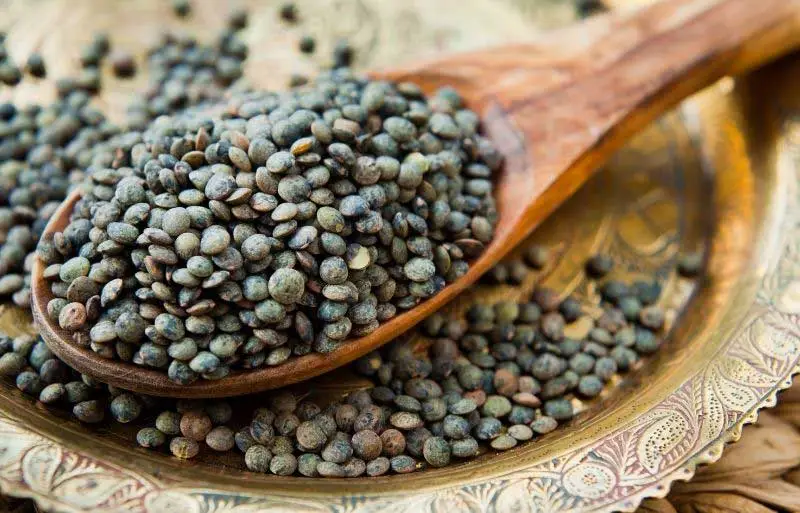
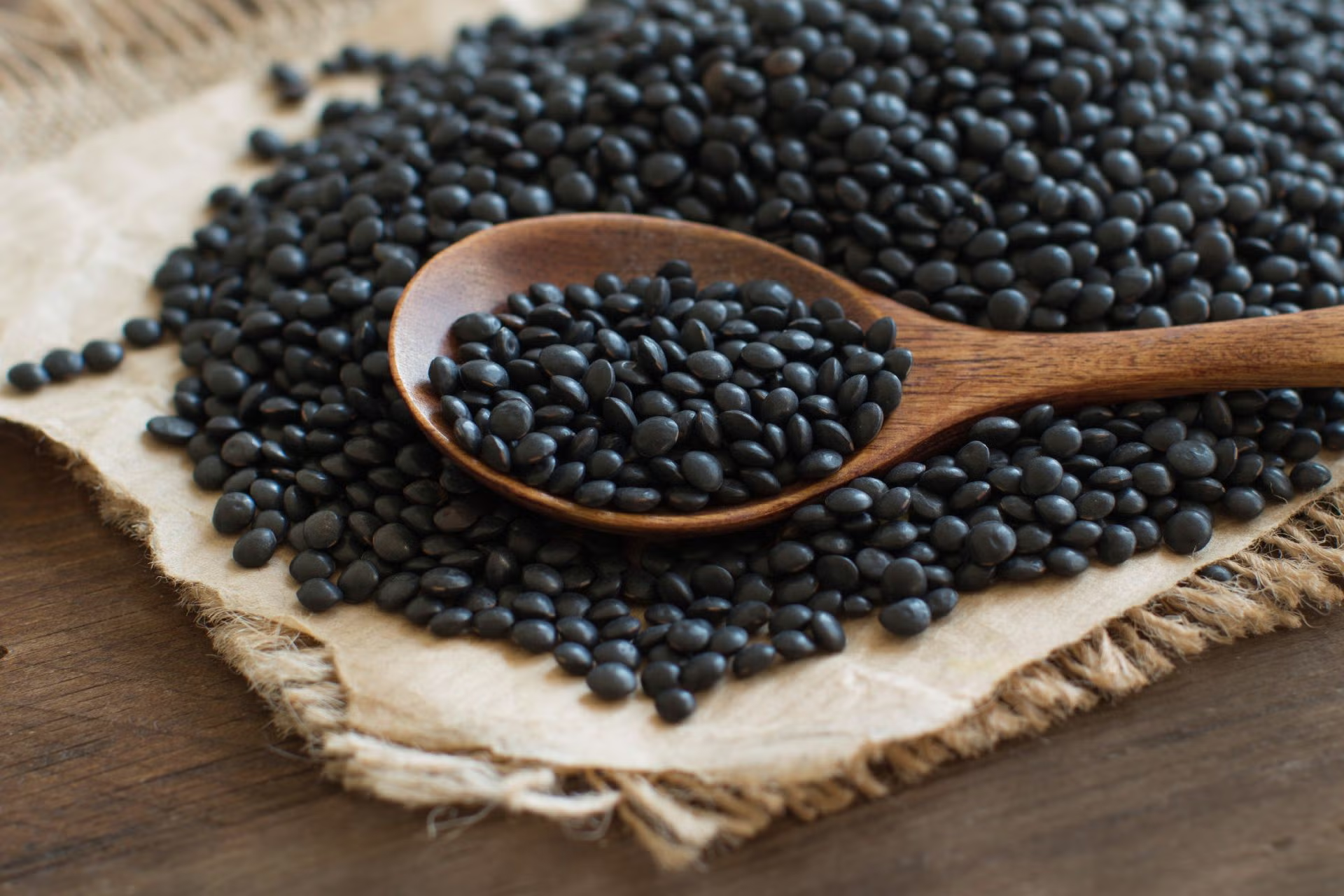
French green lentils (aka Lentilles du Puy) and Beluga lentils
Garlic, bay leaf, thyme, sometimes bundled neatly into a bouquet garni so it can be removed without drama. The result? A rich, savoury base that behaves like a side dish but secretly thinks it could be the main character.
Ingredients
2 tablespoons olive oil
2 cups onion, diced
1 cup celery, diced
1 cup carrot, diced
3–4 garlic cloves, roughly chopped
1½ cups dry French green lentils (Le Puy) or Beluga/black lentils
¼ cup sherry, red, white, or skip and add 1 tsp red wine vinegar at the end
4 cups vegetable or chicken stock (or water + 1 bouillon cube)
1 teaspoon salt
½ teaspoon mustard (whole grain or Dijon, optional but encouraged)
4–5 sprigs fresh thyme (or 1 tsp dried)
2 bay leaves
Instructions
Heat olive oil in a large sauté pan over medium-high heat.
Add onion, celery, and carrot. Stir 4–5 minutes, then lower heat to medium and cook another 4–5 minutes until soft and fragrant.
Add garlic and lentils. Stir for 2 minutes.
Pour in the wine and let it cook off, about 2 minutes.
Add stock, salt, and mustard. Stir, bring to a lively simmer.
Add thyme and bay leaves, cover, and gently simmer on low for 25–30 minutes, until lentils are tender but still holding their shape.
Uncover and cook off any excess liquid. Remove herbs, taste, adjust salt.
Finish with a tiny splash of red wine vinegar to wake everything up.
These lentils aren’t just a side, they’re the foundation. Calm, grounding, and quietly doing the responsible work so the proteins can have their little emotional arcs. From here, you choose your adventure.
For my recipes, I used the same technique (sous-vide) for both mains, because chaos is for flavour, not for planning.
Main #1: Sous-Vide Pork Tenderloin with Herb Crust - rich and indulgent.
Main #2: Sous-Vide Salmon - clean and confident.
Main #1: Sous-Vide Pork Tenderloin with Herb Crust
I remember one of my eeriest and most unforgettable cooking experiences. It took place in the kitchen of a French chef who taught me how to make Salt-Crusted Pork Roast (Rôti de porc en croûte de sel).
He was a little unhinged. Loud. Intensely French.
He had opinions, strong ones. About former colleagues. About chefs he clearly despised. About people who were absolutely not present to defend themselves. Many of these opinions were wildly inappropriate and delivered at full volume. No one intervened. Everyone carried on chopping, stirring, nodding, as if this were perfectly normal behaviour. Which, somehow, in that kitchen, it was.
And yet, what he cooked was extraordinary:
Rôti de porc en croûte is a classic of French cuisine, traditionally prepared in one of three ways: wrapped in puff pastry for crispness, or encased in a salt crust for meat so tender it barely resists the knife or in a herb and mustard crust.
I choose the last one.
I’ve always felt that throwing away a kilo of salt a bit wasteful. Especially when the herb-and-mustard version tastes just as good, if not better.
Sous vide cooking

When sous vide machines finally became mainstream, I never looked back.
Sous vide (French for “under vacuum”) is a very polite way of cooking food in a plastic bag, slowly, in a warm bath, at an extremely controlled temperature. Invented by a French chef in the 1970s, it’s all about patience: low heat, long time, no panic.
The goal? Perfectly even cooking, maximum juiciness, and zero drama. Nothing overcooks, nothing dries out, and the food emerges calm, tender, and quietly superior.
Sous vide is pronounced soo veed - with a D at the end!
It’s often mispronounced as "soo vee", which is… unfortunate, because sous vie means something else entirely. And while cooking under life sounds poetic, it is not, in fact, a method.
The D matters. Say it proudly. Like you know what you’re doing.
So, pork tenderloin, so often dry and unforgiving, becomes something else entirely when cooked sous vide: juicy, precise, nearly impossible to mess up. I rarely make pork tenderloin without it now (unless it’s butterflied and marinated). It’s simply superior.
Yes, it’s an investment (around $100) but everything you cook with it improves. And it’s small, which matters when your kitchen is already full of appliances you swore you’d use and absolutely do not.

When you’re dealing with quick-cooking meats (steaks, pork chops, pork tenderloin) temperature is everything. It’s the difference between juicy and jubilant, or dry and deeply disappointing. Pork starts tightening up and squeezing out moisture around 120°F (49°C), and from there it just gets more opinionated the hotter it goes.
Sous vide, thankfully, puts you in charge.
Choose your temperature, lock it in, and let the pork behave exactly the way you want it to.
This is the chart (form Serious Eats) I personally use when recommending sous-vide temperatures for pork tenderloin - my go-to reference. And if you’re short on time, three hours is plenty to get it perfectly tender and juicy.
Sous-Vide Pork Tenderloin with Herb Crust
Serving: 3-4 | Prep time: 10 minutes | Cook time: 3 hours and 10 minutes

Deeply savoury. Ridiculously good. A perfectly juicy pork tenderloin with a bold mustard, garlic, and herb crust. Quite possibly the best pork tenderloin you’ll ever make.
Ingredients
1 pork tenderloin (about 500–600 g / 1.1–1.3 lb) - ideally with a bit of fat still attached
1 tsp fine salt
½ tsp black pepper
2 clove garlic, lightly crushed, skin left on
1 tbsp butter or olive oil
For the crust
2 tbsp coarse Dijon mustard
1 tbsp garlic paste or finely minced garlic
1 tbsp fresh thyme, chopped
1 tbsp fresh rosemary, chopped
½ tsp black pepper
Flaky salt, to finish
Instructions
Prepare the water bath: Fill your sous vide container with enough water to fully submerge the food, ensuring the minimum water level is met. Attach the immersion circulator and begin heating.
Choose your cooking temperature - see the chart above for your preferred level of doneness. My personal sweet spot:
Temperature: 140°F (60°C)
Time: 3-4 hours
Season & sous vide: Season the pork tenderloin generously with salt and pepper. Place it in a vacuum bag with the butter (or oil) and garlic, seal, and cook at your chosen temperature for the selected time.
Dry & preheat: Remove the pork from the bag and dry it thoroughly with paper towels. This is essential for browning
Preheat the oven to 550°F / 290°C. If available, use the roast or broil function with heat from the top element.
Prepare the crust: In a small bowl, mix the Dijon mustard, garlic paste, thyme, rosemary, and black pepper.
Coat the pork: Spread the mustard mixture evenly over the pork. Sprinkle lightly with flaky salt.
High-heat finish: Place the pork on a rack set over a baking sheet (for air circulation), fat side up. Position it on the top rack, close to the heating element. Roast until deeply golden and crusted, about 5–6 minutes.Turn and roast the other side for a few more minutes if needed.
Rest & serve: The pork has already rested slightly after sous vide, so it won’t overcook in the oven. Slice and serve immediately.
Note: You can also skip the oven and finish the pork in a screaming-hot (cast-iron) pan, turning until a deep crust forms on all sides. It’s a bit messier and requires more kitchen cleanup, but just as excellent.
The Main #2: Sous-vide Salmon
Now yes, I use my sous vide machine for the salmon too. If you’re going to spend the money, you might as well commit.
Some people will tell you sous vide isn’t necessary for fish. Fish cooks fast. Fish is forgiving. Fish doesn’t need the drama. To which I politely ask: have you actually tried it? Because if the answer is no, you’re missing out.

Cooking salmon sous vide is the simplest way to get perfectly cooked fish, every single time. No guessing, no hovering over the pan, no crossed fingers. Just precision.
Sous vide salmon comes out a luminous, translucent blush: silky, delicately flaky, and impossibly tender. Pan-seared salmon, meanwhile, often tells a more chaotic story: overcooked edges, a centre scrambling to catch up, and that telltale white albumin quietly announcing the fish has gone a step too far.
With sous vide, the salmon never panics. The temperature is exact, the texture is controlled, and the uncertainty disappears. What you’re left with is calm, precise cooking, and salmon that’s consistently moist, tender, and quietly perfect.
Also: choose your salmon wisely. This is not a background protein. This is the main character.
Salmon isn’t here to politely fill space on the plate while sauces and sides do the talking. Its flavour, texture, and fat content are the point. Good salmon should taste clean and rich at the same time, with enough natural fat to stay luscious when cooked gently. When you start with quality, fresh, well-handled, responsibly sourced, you don’t need tricks. No heavy marinades, no distractions, no apologies.
Treat it like the lead role it is, and everything else on the plate should know its place. Lentils, attention!
Temperature Matters (A Lot)
Salmon is extremely sensitive to temperature. Even a few degrees can mean the difference between silky perfection and disappointment. That’s why precision matters.
My personal preference, after far too much research (blogs, chefs, restaurant kitchens) and a few very willing test runs, is 113°F / 45°C for 50 minutes.
The result is salmon that’s translucent, incredibly moist, and delicately flaky, almost custard-like, but still recognizably salmon.
Thicker fillets may need closer to an hour, but the beauty of sous vide is this: whether you’re cooking one portion or ten, the method stays the same. Every fillet comes out perfectly cooked.
Sous Vide Salmon Temperature Guide
104°F / 40°C – Firm, sashimi-like
113°F / 45°C – Translucent, just beginning to flake (my favourite)
122°F / 50°C – Very tender, moist, and flaky
131°F / 55°C – Firm, fully flaky, still juicy
Sous-Vide Salmon with Brown Butter Miso
Servings: 4 | Prep time: 10 minutes | Cook time: 1 hour
The brown butter miso is optional, but I really love this umami-packed sauce. If you don’t feel like buying miso or making the sauce, the salmon is still perfectly delicious simply seared after its sous-vide bath and served over lentils. Simple, elegant, and still very much a win.

Ingredients
Salmon fillets: Atlantic or Pacific salmon both work well. Look for vibrant colour, intact skin, and flesh that looks plump and fresh. Avoid any dullness, brown spots, or overly fishy smell, fresh salmon should smell like the ocean, not like regret.
For Sous Vide Salmon
Four 115 grams / 4 oz salmon fillet, skin on, pin bones removed, 560 grams /16 oz in total
10 grams / 2 tsp kosher salt
Freshly cracked black pepper, to taste
2 clove garlic, lightly crushed, skin left on
30 grams / 2 tbsp unsalted butter or olive oil
For the brown butter miso
115 g / ½ cup unsalted butter
2 tbsp Japanese miso paste
1 tbsp soy sauce or tamari
1 tsp rice vinegar or lemon juice
1 tsp honey or maple syrup (optional, for balance)
Instructions
Prepare the water bath: Fill your sous vide container with enough water to fully submerge the food, ensuring the minimum water level is met. Attach the immersion circulator and begin heating.
Choose your cooking setting
Texture: Tender with a warm, silky center
Temperature: 113°F (45°C)
Time: 50 minutes
Prepare the salmon: If not already cut, cut into portions of about 4 oz /115 g each.
Season: Lightly season each salmon portion with kosher salt and freshly cracked black pepper. Place into a vacuum bag with the butter or olive oil, and garlic.
Seal: Vacuum-seal the bag, making sure all excess air is removed and the salmon is fully sealed.
Submerge: Attach a weight to the bottom of the bag if needed to keep it submerged. Lower the bag into the water bath and secure it with a clip.
Cook: Let the salmon cook sous vide for the full 50 minutes at 113°F / 45°C or adjust to your liking- see the Temperature Guide above and follow your own level of commitment.
Remove and dry: Carefully remove the salmon from the water bath. Transfer the fillets to a paper towel–lined plate or baking sheet. Discard the garlic. Pat the skin thoroughly dry (this is key for a good sear.)
Make the brown butter miso:
In a small saucepan, melt the butter over medium heat.
Continue cooking until the butter foams, then turns golden brown and smells nutty.
Remove from heat and whisk in miso, soy sauce, vinegar, and honey (if using).
Keep warm on very low heat.
Finish
Place the salmon on a bed of lentils and spoon the warm brown butter miso generously over the top. Finish with:
A sprinkle of sesame seeds
Chopped chives or scallions
A pinch of flaky sea salt
Serve immediately, and try not to lick the spoon.

In the end, this is really a love letter to good building blocks: a humble mirepoix, lentils with integrity, a well-treated piece of pork or salmon, and a bottle of wine that knows how to behave at the table. Nothing flashy, nothing bossy, just thoughtful cooking that rewards attention and forgives the occasional glass too many. Make it once, then make it your own. Add herbs with confidence, pour the Canadian wine proudly, and remember: when lentils are this good, they’re no longer a side dish, they’re a lifestyle.
Happy sipping and savouring!


Comments