

Korean Family Favourites from a Non-Korean Cook
No family lineage of recipes, no formal training. Just a lot of enthusiasm and a curious palate.
These are four dishes we keep coming back to at home. The kind that have quietly worked their way into our regular rotation: comforting, full of flavour, and reliably satisfying every time.
Kimchi sundubu jjigae, at the top of the list is, a rich, warming stew that really shines on cold winter nights. That said, we’re not strict about seasons in our kitchen. If you’re craving it, you make it.
Seafood pancakes - perfect as an appetizer, an easy light supper, or the kind of "just one more piece" situation that somehow turns into dinner.
Perilla oil buckwheat noodles with pulled pork - elegant but still a little rustic, and just as good served cold on a hot summer day.
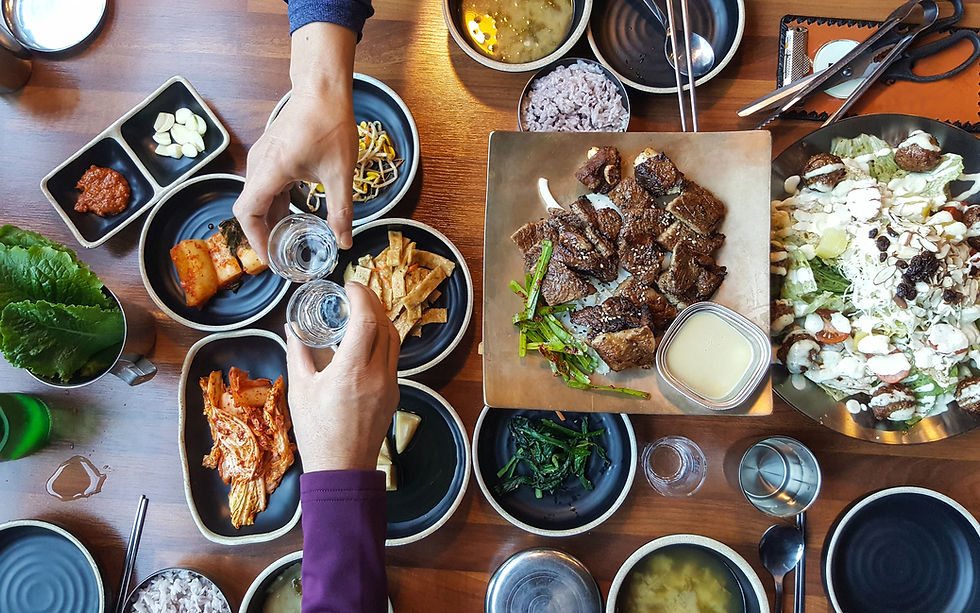
Beef bulgogi with japchae noodles and banchan - a classic Korean favourite, paired with those glossy glass noodles to keep things a bit lighter, plus a whole spread of vibrant side dishes.
For each dish, I’ve included a wine pairing list, something a little unexpected if you’re in the mood to switch things up from the usual soju and try a different kind of balance at the table.
I’ve also written a slightly long and very eclectic article about Korean food culture - consider this your friendly warning before you click.
A quick note: I’m not Korean. What I know comes from a mix of cooking, reading, and eating some truly great Korean food around the city. These recipes are my take on dishes I genuinely love and cook often.
I hope these recipes find their way into your kitchen and become favourites for you, too.
Haemul PajeonSeafood Scallion Pancakes(해물 파전) Serving: 4 Prep time: 5 minutes | Cook time: 10 minutes Pajeon is a popular Korean savoury pancake where fresh green onions (pa = scallion) really take centre stage, giving it its signature aroma and flavour. In Korean pancakes, or jeon, the ingredients like seafood and scallions aren’t mixed into a batter beforehand. Instead, they’re laid out in the pan and then lightly covered with batter. That coating sets as it cooks and holds the ingredients together, rather than forming a fully mixed dough. When seafood is added, it becomes haemul pajeon. I usually go with calamari or prawns, but it’s pretty flexible: clams, mussels, oysters, or whatever you’ve got on hand all work well. You can also skip the seafood entirely and still end up with a really solid vegetarian version. If you add kimchi, they are called kimchi jeon. A splash of sparkling water in the batter can help keep things lighter and crispier, though it does make the mixture a bit thicker. Heat control is important too: too high and it burns before the inside cooks through, too low and you lose that crisp edge and end up with something greasy instead of golden and crunchy. You can either fry smaller pancakes, which are easier to handle and result in crispier pieces, or make one large pancake and cut it into portions. IngredientsPancakes
(You can also use a premixed Korean pancake mix to replace these five ingredients.)
Filling
Dipping Sauce
Make the Dipping Sauce first, even the day before, keep refrigerated by mixing all the ingredients. In a mixing bowl, whisk together the flour, cornstarch, salt, garlic powder, onion powder, and cold water until smooth. (You can pour the batter into a jug to make it easier to handle later.) Cut the green onions into 3 cm / about 1¼ inch pieces. Slice the red chilli thinly. Roughly chop the shrimp and other seafood. Heat about 1 tablespoons (15 ml) of oil in a non-stick frying pan over medium-high heat. Let the pan get properly hot; test it by dropping in a little batter; it should sizzle immediately. Once ready, pour just under half of the batter into the pan and spread it thinly and evenly. Lay half of the green onion tops across the batter in parallel lines. Lightly spoon a bit more batter over the top and into the gaps to help everything stick together. Scatter over some calamari, prawns, and chilli slices if using. Drizzle half of the beaten egg across the surface. Cook for about 4 minutes until the bottom begins to set and turn golden. Gently shake or swirl the pan occasionally so it doesn’t stick. Carefully flip the pancake. Add a little extra oil around the edges if needed to help crisp it up. Press down lightly with a spatula to encourage browning and crisp texture. Cook for another 3–4 minutes until fully cooked and golden. Remove from the pan and repeat with the remaining batter and toppings. Slice into bite-sized pieces and serve hot with the pancake dipping sauce. Wine Pairing TipsHaemul pajeon sits somewhere between crispy, oily comfort food and fresh, briny seafood dish. The key is contrast: you want wines with bright acidity, a touch of lift (or bubbles), and clean flavours that cut through the fried batter while highlighting the scallions and seafood.
Dry, energetic, and slightly peppery, great with anything green and savoury.
Bubbles are your best friend here, they cleanse the palate and make the dish feel lighter and more refined.
A versatile option, especially if your dipping sauce leans salty or slightly spicy. | Sundubu JjigaeSoft Tofu Kimchi Stew(김치순두부찌개) Serving: 4 Prep time: 10 minutes | Cook time: 30 minutes A classic Korean stew made with fermented kimchi, pork, and uncurdled, extra-soft egg tofu called sundubu, along with aromatics, simmered into a rich, spicy, and tangy broth. At Korean grocery stores, you’ll usually come across soft "egg" tofu in two main forms. The most common is a long cylindrical plastic pouch, while the other comes in a standard square tofu container. I tend to prefer the cylinder-style soft tofu because it’s faster and easier to use in soups and stews. You just slice into the middle of the package (careful—there’s usually a bit of liquid), push the tofu out, and cut it straight into rounds over the pot. That said, either version works just fine for this dish. If you can, pick it up at an Asian supermarket like A-Mart or T&T in Canada - the tofu there is usually cleaner, with fewer additives. And if you see an organic option, even better. It’s not typically expensive, and worth choosing when available (tip: Pulmuone is a solid brand). Sundubu Jjigae is often served bubbling hot in a traditional earthenware pot (ttukbaegi) with a raw egg cracked in just before serving. These pots usually serve two portions, so I make ours in a larger pot or cast iron for at least four people. It is served with rice. Ingredients
Finish
InstructionsPrep Cut the pork into bite-sized pieces. Chop the kimchi into similar-sized chunks (well-fermented, slightly tangy kimchi really makes this dish). Slice the green onions thinly, mince the garlic. Cook the stew Heat the oil in a pot or wok over medium-high heat. Add the pork and cook for about 6 minutes, until it’s browned and the fat has rendered. Add the onion and garlic, and cook for 1–2 minutes until fragrant and lightly coloured. Reduce the heat to medium, then add the kimchi and gochujang. Cook for 5 minutes, stirring regularly, until the kimchi softens and everything is well combined. Pour in the water and bring it to a boil. Once it starts bubbling, lower the heat slightly and let it simmer for another 20 minutes. Taste and adjust: add a bit of salt if needed (around 1/4 tsp), or a pinch of sugar if it’s too sour. Add the soft tofu, gently breaking it into large pieces with a spoon or if you are using the tub, cut into slices. Let it simmer for about 3 more minutes. To finish (optional but recommended) Top with sliced chilies and green onions. Bring it to a boil until it’s piping hot, then take it off the heat. Serve immediately with steamed rice. Wine Pairing TipsSundubu jjigae sits firmly in the world of bold, spicy comfort food: rich, bubbling, and full of heat. The trick is balance: you want wines with bright acidity, low tannins, and ideally a touch of sweetness or fizz to cool things down and reset your palate between bites.
Serving tip Keep whites and rosés well chilled (around 7–10°C / 45°F to 50°F), and serve lighter reds slightly cool. Avoid heavy, tannic reds. They tend to amplify the heat rather than soften it. |
Deulgireum MakguksuPerilla Oil Buckwheat Noodles with Pulled Pork(들기름 막국수) Serving: 4 Prep time: 35 minutes | Cook time: 3–4 hours for the pulled pork; active cooking for the rest is 20 minutes Korean buckwheat noodles (deulgireum makguksu) are light, nutty, and fragrant, typically tossed in perilla oil and finished with fresh, crisp garnishes. In this version, they’re paired with slow-braised Korean-style pulled pork coated in a slightly sweet and smoky BBQ-style sauce, adding richness and depth. Fresh greens help balance the dish, making it hearty yet still refreshing. For the pulled pork, we use about 2 kg (4.5 lbs) of pork shoulder. This larger cut is ideal for slow cooking: it stays juicy, breaks down into tender strands, and develops deeper flavour over time. It also yields leftovers that work beautifully in rice bowls, sandwiches, or even kimbap-style rolls. IngredientsFor the Pulled Pork
Rub the pork with garlic, onion powder, brown sugar, salt, and pepper. In a dutch oven, sear it in a oil/lard until browned all over. Add apple cider vinegar, chicken stock, and Korean BBQ sauce. Slow-cook or braise until the pork is fall-apart tender. Shred it and keep it warm. Perilla Oil Sauce
In a medium-sized mixing bowl, combine soy sauce, perilla oil, and sugar and mix until the sugar dissolves to create the noodle sauce. Set aside. Braised Bok Choi
Heat oil and butter in a pan, add bok choi cut-side down, and sear lightly. Add soy sauce, fish sauce, and mirin, then cover and let it braise for a few minutes until tender but still bright green. The Noodles
Cook and drain the noodles. Strain and rinse them with cold running water until cold. Then drain and shake out as much excess water in the noodles as possible. Assembly & Garnish
Transfer the noodles into the bowl with the noodle sauce. Add roasted seaweed flakes and toss well. Top with pulled pork, braised bok choi, egg yolks, carrot, spring onion, coriander, and a pinch of chili flakes, sesame seeds, green onions. Quick Korean BBQ SauceTime: 10 min | Servings: 8 Ingredients:
Instructions:
Wine Pairing TipThis dish sits in a complex zone: nutty perilla oil, sweet-smoky pork, gentle spice, and umami richness. The best wines either refresh the palate, echo the spice-sweet balance, or cut through the richness without clashing with the oil.
| Beef Bulgogiwith Japchae Noodles(불고기 - 잡채) Serving: 4 Prep time: 20 minutes | Cook time: 35 minutes Bulgogi ("fire meat") is thinly sliced marinated beef, flavoured with soy, sesame, garlic, ginger, sugar, Asian pear, and pepper. Savoury, sweet, and salty, spicy - adjust heat, sugar or soy to taste. Bulgogi can be cooked on a grill or in a pan/skillet. Either way, the taste is slightly different but always delicious! Tip: Cook in batches to avoid overcrowding, which ensures even browning and maximum flavour. Japchae are chewy sweet potato glass noodles, often served during festive occasions alongside bulgogi. While it’s more common to enjoy the meat over rice, Japchae is a family favourite in our house. Simple, flavourful, and satisfying enough to be a meal on its own. To balance the sweet and savoury flavours of the beef and noodles, a few banchan (side dish) are traditionally served alongside the meal. Here, we opted for a family-style setup. The noodles and beef could easily be mixed together as is customary, but serving them separately allows even the pickiest eaters to better understand and enjoy each component while choosing what they want from the selection. Best Beef for Bulgogi
Slicing Tips:
IngredientsBeef Bulgogi
Marinade
Garnish
Instructions
Japchea
Wine Pairing TipFor a meal like beef bulgogi with japchae and a spread of vibrant banchan, the ideal wine should balance sweet, savoury, spicy, and tangy flavours while refreshing the palate between rich, sesame-laced bites.
|
What to avoid:
Big tannic reds (Cabernet, Bordeaux blends),
Oaky whites (buttery Chardonnay, oak-heavy Viognier),
Very dry, low-acid wines (flat Pinot Blanc, some cheap Pinot Grigio),
Overly sweet dessert wines (Sauternes, late-harvest styles),
Very high-alcohol wines (15%+ jammy reds).
Happy sipping and savouring! - 맛있게 드시고 즐거운 시간 보내세요
Awesome! I love experimenting with other cultural dishes and you do a great job!