

From Seoul with Love - Low Tannin, High Emotion
Updated: Jul 30
I’ll keep this intro brief, but fair warning: I’m completely biased when it comes to anything Korean.
It all started with a book, really a historical record, which probably makes sense since I’m a bit of a history geek. From there, it was a natural shift into dramas and films. Food came next, of course, and despite my best intentions, a very selective, carefully curated appreciation of K-pop somehow followed.
And I’m far from the only one caught up in it. Even if you’ve never heard the term Korean Wave or Hallyu, you’ve definitely felt it. South Korean culture has quietly (and then not-so-quietly) taken over the world: K-pop, K-beauty, K-dramas and films… and very decisively, K-food.
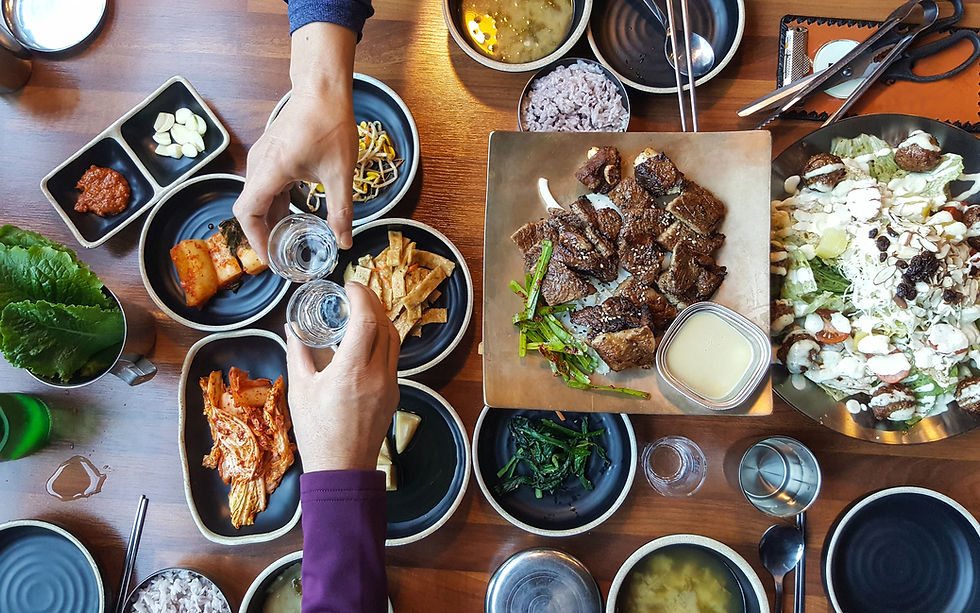
Kimchi, bulgogi, bibimbap, Korean fried chicken - these are no longer niche curiosities. They’re everywhere. I even stumbled across Korean specialty shops in smaller cities in Hungary last summer, where you can casually pick up gochujang, seaweed snacks, and instant noodles like it’s just part of the everyday grocery run.
What began in the 1990s as a cultural ripple, supported along the way by thoughtful government backing, has grown into a global powerhouse: an economic engine, a tourism magnet, and one of South Korea’s most effective forms of soft power. And it shows up in everything from entertainment to what ends up on the table.
My entry point into all of this was The Memoirs of Lady Hyegyŏng (1805). As a history lover with a soft spot for women’s stories, it sent me straight down a rabbit hole. To learn more about this princess of Korea’s Joseon dynasty, and the wife of the tragically executed Crown Prince Sado, I started watching Korean historical dramas to bring her world to life: the costumes, palaces, the rituals of court life. I quickly learned there were many dramas. Very many. And once you start, stopping becomes… optional.
The storylines are dramatic and emotionally relentless, but for me, the real standout was always the food.

Sizzling bulgogi, perfectly balanced bowls of bibimbap, and a steady stream of banchan arriving like small edible gifts. I was hooked. It didn’t take long before I was in my own kitchen, working with thinly sliced eye of round, questionable technique, and a surprising amount of confidence, trying to recreate what I’d seen on screen one episode at a time.
Then came the COVID years, with three teenage girls under one roof: our two plus a niece who could have claimed a gold medal in picky eating. Korean food turned out to be a lifesaver.The mix-and-match spread of small dishes meant everyone could build their own plate, skip what they didn’t like, and still leave the table full, all without stretching the budget too far. It wasn’t just fun, it was necessary.
Fast-forward to now, and Calgary is packed with Korean spots. Kimbap counters, fried chicken joints, BBQ grills constantly going - blink and you might accidentally walk into a Korean restaurant.
What really sealed it, though, was how familiar Korean food felt. Pork, cabbage, fermentation, heat - there’s something almost Eastern European about it. When even my most traditionally minded Hungarian guests asked for seconds and recipes, I knew it had earned a permanent place at our table.
What is the essence of Korean food?
Photo by Daniel Photo by Glib Albovski Photo by Deepthi Clips
Trying to pin down an entire country’s culinary identity in a few points is impossible - especially one shaped as much by mountains and farmland as by a coastline that hugs it on nearly all sides. But if I had to name the forces that define Korean food, these are the ones I keep coming back to:
Fire
High heat is everywhere: grills, open flames, quick sears, pulling out flavours that are bold, direct. Fire also means spice: heat that wakes you up rather than overwhelms, turning food into something expressive and alive.
Fermentation
The quiet backbone of Korean cuisine. A 5,000-year-old practice that preserves food, builds nutrients, and creates profound depth. Jang (soy sauces and pastes), kimchi, and jeotgal (fermented seafood) are all patiently aged, often in earthenware jars called onggi, allowing air and temperature to do their slow, transformative work. This is where umami lives.
Comfort
At its core, this is food that nourishes. It follows the seasons: lighter and brighter in the summer, deeply warming in the winter. And it’s meant to be shared. Meals are built around the table: small dishes, passed around, tasted together, with everyone reaching in and helping themselves.
And that’s really the point. Korean food isn’t just about what’s on the plate. It’s about how it’s eaten. It invites conversation, a bit of back-and-forth, the easy rhythm of sharing. It’s generous by nature, designed to bring people in.
Bold, patient, and deeply rooted, Korean cooking balances fire and time in a way few cuisines manage, and that balance is what makes it stick with you.
From Soju to Sauvignon: A Very Brief History of Wine in Korea
Since this is a wine blog and not a K-drama fan club - no love triangles or zombie apocalypses here - let’s pour a glass and explore how wine made its mark in (South) Korea.
South Korea is a young wine culture in an old drinking nation.
Wine has never been a central part of drinking culture across much of Asia, and large-scale wine production arrived relatively late. While Korea, Japan, and parts of China technically sit within the global "wine zone" (those 30–50° latitude bands where grapes thrive), history had other plans.
On paper, Korea looks promising. Its latitude mirrors Spain’s, and the peninsula is bordered by ocean on two sides. The coordinates were right, the climate wasn’t. Harsh winters, humid summers, fungal pressure, and limited vineyard land make viticulture challenging. In a small, densely populated country, agriculture naturally favoured more practical crops over wine, and rice and vegetables won out. Shocking, right?

That didn’t mean Korea lacked a drinking culture. Quite the opposite. For centuries, it has revolved around grain-based drinks like makgeolli, takju, and soju, with beer also firmly in the mix.
Modern wine arrived relatively late. Korea’s first contemporary winery appeared in 1977 under the Majuang label, initially producing Riesling and Muscat. As in many wine regions, early production was driven less by pleasure than by necessity: sacramental wine for a growing Catholic population.
Today, South Korea’s wine scene is small but distinctly local. It’s best known for fruit wines - bokbunja-ju (blackberry), maesil (plum), and omija-based wines made from indigenous berries, alongside reds from the native meoru grape (Vitis amurensis). These wines are deeply coloured, high in acidity, and full of character, often bottled as meoru-ju, with key producer Sanmeoru Farm, in Paju.
Vitis amurensis, meoru Sanmeoru Farm via trippose.com Sanmeoru Farm via trippose.com
Sanmeoru Farm, Paju, South Korea
Natural wine made entirely from Campbell Early grapes is becoming increasingly popular in South Korea (and Japan). These wines are typically light, fruity, and refreshing, often produced using carbonic maceration to enhance their berry flavours while softening the grape’s natural table-grape acidity.
Best served chilled, these wines frequently showcase notes of strawberry, raspberry, and cherry.
Some key producers include Les Dom, from Chungju, and Chateau Miso, from North Chungcheong Province.
These wines are often made with minimal intervention, occasionally left unfiltered or crafted as sparkling pét-nat, highlighting the unique, "funky" character of the Campbell Early grape, a hybrid table grape beloved in Asia for its distinctive flavour profile.
chateau_miso | dominique_les_dom
What I find fascinating is how winemaking transcends borders, allowing people to bring their heritage and vision to entirely new landscapes.
Dominique Herqué, a French engineer, realized his dream by founding Little Alsace/ Les Dom in South Korea, creating a biodiverse, chemical-free vineyard inspired by his Alsace roots.
Conversely, Jae Chu Cramette, a South Korean winemaker trained in Burgundy, launched her own project in France (Maison des Joncs) before becoming winemaker at Château Grillet in the Northern Rhône, and now at Domaine d'Eugénie in Vosne-Romanée, Burgundy - France's most prestigious wine estates.
Both journeys highlight how winemaking thrives on the movement of people, ideas, and perspective
Imported Wine Trends
Additionally, as South Korea has become more global, imported wine has built a strong and growing following. People are no longer just drinking wine for the sake of it. It’s become part of a wider interest in global food, culture, and experiences.
Today, the imported wine market in South Korea is settling into a more stable rhythm after the sharp post-pandemic boom. This doesn’t mean interest is fading. Instead, it shows the market is finding a healthier balance as importers and consumers adjust to changing economic conditions and more realistic levels of demand.
France is still the top supplier, followed by the United States, Italy, Chile, and Spain. More recently, New Zealand has stood out by performing better than expected, even overtaking Australia, thanks to strong demand for wines like Sauvignon Blanc and Pinot Noir. Each wine region now has its own clear place in the market, whether in premium or more affordable categories.
At the same time, people’s preferences are changing. White and sparkling wines are becoming more popular, and more shoppers are choosing affordable options overall. How wine is sold is also changing, with convenience stores and smart ordering systems playing a bigger role than before.
Overall, the market isn’t shrinking, it’s simply maturing. It’s becoming more price-conscious, more varied in taste, and more shaped by easy, convenient ways to shop and buy wine.
Wine Pairing with Korean Food: It’s Not Just Umami
Once you look at Korea’s geography and drinking history, one thing becomes clear: Korean food wasn’t designed for wine. It evolved alongside drinks like soju and makgeolli - tools that refresh the palate, cut through richness, and reset between bites. (At this point, my Northern and Eastern European readers are likely nodding vigorously, instantly understanding the logic.)
Soju, in particular, is ruthlessly efficient. No tannin, no oak, no contemplation. It slices through spice and moves on.
This is why Western wine logic often falls apart at a Korean table. The problem isn’t pairing wine with Korean food. It’s expecting wine to behave like wine.
The wines that work best behave more like soju: bright, clean, low in tannin, and completely unbothered by what’s coming next.
Korean food balances three key forces:
Umami from fermentation
Sweetness woven into sauces and marinades
Layered heat from chili, garlic, and spice
That balance changes everything.
One of my earliest professional pairing experiences involved help building a tasting menu blind. A few Korean-inspired dishes appeared, right in the middle of my K-drama phase, and I thought: I was born for this.
The pairings worked, but I underestimated the sweetness. My Western palate tends to erase sugar in savoury dishes and I always dial it back in my own cooking. The menu did not (but thankfully, the wines held).
Lesson learned: never underestimate sweetness, spice, or your own confidence when pairing wine with unfamiliar cuisine.
Don’t Panic, There Is Wine After Kimchi
Pairing Korean food with wine isn’t a lost cause. It just requires a shift in mindset: think freshness, aromatics, and restraint.
WHITES
For Korean food, white wines with bright acidity, fresh fruit, and a touch of residual sugar (in some cases) tend to work best. They balance heat, lift umami, and keep richer dishes feeling fresh rather than heavy.
Off-dry Riesling – Pairs well with: pajeon pancake, kimbap, bulgogi
The go-to pairing: balances spice, salt, and subtle sweetness effortlessly.
Gewürztraminer – Pairs well with: kimchi, bulgogi, spicy pork (jeyuk bokkeum)
Aromatic and expressive, best with bold, spicy, and fermented flavours.
Chablis – Pairs well with: seafood pajeon
The wine's high acidity complement the dish's savoury, fried nature, while its minerality pairs well with the seafood, making it a classic, versatile choice.
Chenin Blanc (off-dry or demi-sec) – Pairs well with: tteokbokki
Works well when there’s a touch of sweetness to balance heat and gochujang richness.
Grüner Veltliner – Pairs well with: vegetable-forward dishes, seafood, pajeon
Clean, peppery, and refreshing, great with lighter, savoury plates.
Pinot Grigio – Pairs well with: kimbap, simple seafood dishes, mild banchan
Light and neutral, best for subtle flavours and less spicy spreads.
REDS
General note on reds: light, chillable reds like Gamay or Pinot Noir work best when spice is moderate and the dishes aren’t too heavy. Higher-acid reds like Barbera or Loire Cabernet Franc can handle richer, more savoury flavours, but very spicy, gochujang-heavy dishes can still overpower most reds.
Gamay – Pairs well with: dakgalbi (spicy stir-fried chicken), bulgogi, kimbap, japchae, haemul pajeon (seafood pancake), kimchi fried rice
Best when spice is moderate.
Barbera – Pairs well with: jjajangmyeon, kimchi fried rice
High acidity cuts through richness and oil.
Chianti – Pairs well with: bulgogi, galbi
Works best with grilled, slightly sweet meats.
Loire reds (Cabernet Franc) – Pairs well with: grilled pork, mushroom dishes, lighter stews, sesame-forward or mildly kimchi-based dishes
Herbal, high-acid profile suits savoury, not-too-spicy dishes.
Pinot Noir – Pairs well with: bulgogi, mushroom dishes, kimchi jjigae (with caution)
Best with umami-rich dishes; avoid very spicy or highly acidic versions.
BUBBLES
Sparkling wines with high acidity and natural effervescence cut through fried richness, balance sweet-spicy sauces, and refresh the palate. They also work beautifully with lighter seafood dishes.
Brut Champagne – Pairs well with: Korean fried chicken, dakgangjeong (crispy sticky chicken)
Classic pairing: acidity and bubbles balance fried, sweet, and savoury elements.
Franciacorta – Pairs well with: haemul pajeon (seafood pancake), grilled fish
Elegant structure and fine bubbles suit seafood and lighter, savoury dishes.
Cava – Pairs well with: bossam, galbi
Bright acidity and savoury depth work well with fatty, slow-cooked meats.
Crémant de Loire / Crémant de Bourgogne – Pairs well with: kimchi jeon (kimchi pancakes), mild tteokbokki
Versatile and food-friendly, especially with savoury, slightly spicy dishes.
Pét-Nat – Pairs well with: spicy pork bulgogi, gochujang-glazed chicke
Slightly funky, lightly fizzy, and lower in alcohol, great with bold, spicy flavours.

... and My Secret Weapon for Spicy Gochujang Korean Ribs...
When I'm making fiery Korean pork ribs loaded with gochujang, I don't reach for beer or a bold red. Instead, I open an unexpected bottle: Le Château d'Avrillé Coteaux de l'Aubance. It may seem like an unconventional choice, but time and again it proves to be the perfect match.
This sweet, late-harvest white wine is made from 100% Chenin Blanc in the tiny Coteaux de l'Aubance appellation of France's Loire Valley. Its generous sweetness is beautifully balanced by vibrant acidity—a combination that works remarkably well with spicy Korean food.
While a dry white can taste sharp or disappear against the intensity of gochujang, the gentle sweetness of Coteaux de l'Aubance softens the heat without masking it. At the same time, Chenin Blanc's bright acidity cuts through the richness of the pork, keeping every bite fresh and lively. Notes of honey, ripe apricot, and tropical fruit also mirror the sweet-savory glaze, creating a pairing that feels effortless rather than forced.
Serve it well chilled, around 8–10°C, and let the contrast do the work. It's one of those unexpected food-and-wine pairings that simply makes sense: the sweetness calms the spice, the acidity refreshes the palate, and the fruit brings the flavours together. It's a bottle I keep coming back to whenever gochujang is on the menu.
In Calgary? Pick up a bottle at Metrovino.
The Takeaway
Avoid overly bold, tannic wines, they tend to clash with the intensity and layering of Korean cuisine.
Good pairing isn’t about taming umami or trying to simplify the food. It’s about working with heat, fermentation, and that subtle thread of sweetness that runs through so many dishes. The best wines don’t compete, they adapt. They know when to step forward and when to stay out of the way.
Think of it like a well-paced performance: balance, precision, and the confidence to hold back just enough for the right moments to stand out.
If this has you even slightly tempted to try it at home, I’ve put together our family favourites here:
Happy sipping and savouring! - 맛있게 드시고 즐거운 시간 보내세요

Comments