

Monks, Myths, and Bubbles: Blanquette de Limoux with Classic Tarragon Chicken
Somewhere between monastic legend and marketing mythology, people forgot that sparkling wine existed long before Champagne became famous for it. Champagne perfected the image, no question, but whether it actually invented sparkling wine is another matter entirely.
The story usually circles back to Dom Pérignon (1638–1715), the Benedictine monk often credited with “inventing” bubbles. It’s a great story, just not a very accurate one. Dom Pérignon wasn’t in Hautvillers chasing sparkle or trying to bottle lightning. His focus was far more practical: improving still wines, refining blends, and keeping quality consistent from one vintage to the next.
At the time, secondary fermentation was unpredictable and poorly understood. During the Little Ice Age (a prolonged cooling period in Europe from roughly the 16th to 19th centuries), cold winters could halt fermentation before all the sugar had been consumed. When temperatures rose again in spring, fermentation restarted inside the bottle, creating carbonation naturally. The result was sparkle, pressure, and, quite often, exploding bottles in the cellar.
What began as a frustrating fault slowly became something winemakers learned to control, and eventually celebrate.

The image of Dom Pérignon as the “father of Champagne” emerged much later, shaped as much by branding and storytelling as by history itself. Anyone familiar with branding and iconography - one born in commerce, the other in sacred art - will recognize the visual language immediately. In paintings, statues and advertisements, Dom Pérignon is often shown with a raised finger, pointing upward or ahead. It’s not historical documentation; it’s symbolism. In Western art, that gesture typically signals revelation, insight, or divine inspiration.
The pose also pairs neatly with the famous, though almost certainly misattributed, quote:
“Come quickly, I am tasting the stars”. Whether he ever said it hardly matters at this point. The line fits the mythology perfectly: sparkle, transcendence, discovery.
Over time, Champagne houses leaned heavily into monastic imagery and tradition, and the symbolism stuck. The monk, the gesture, the sense of revelation, it all became part of Champagne’s identity. What survives today is less a clean historical record than a beautifully constructed myth, polished over centuries and repeated often enough to feel true.
So if it wasn’t Dom Pérignon, and not Champagne, then where did sparkling wine actually begin?
Blanquette de Limoux
To answer that, you need to look south, away from Champagne entirely, to Limoux in the Occitanie region of southern France, where naturally sparkling wine was already part of the story centuries earlier.


Blanquette de Limoux (pronounced blahn-kett duh lee-moo) has the historical record to back it up. Documents from the Abbaye de Saint-Hilaire show that monks in the Languedoc were bottling sparkling wine as early as 1531 - long before Champagne rose to global fame and roughly a century and a half before Dom Pérignon entered the picture. By most accounts, this makes Blanquette de Limoux one of Europe’s oldest recorded sparkling wines.


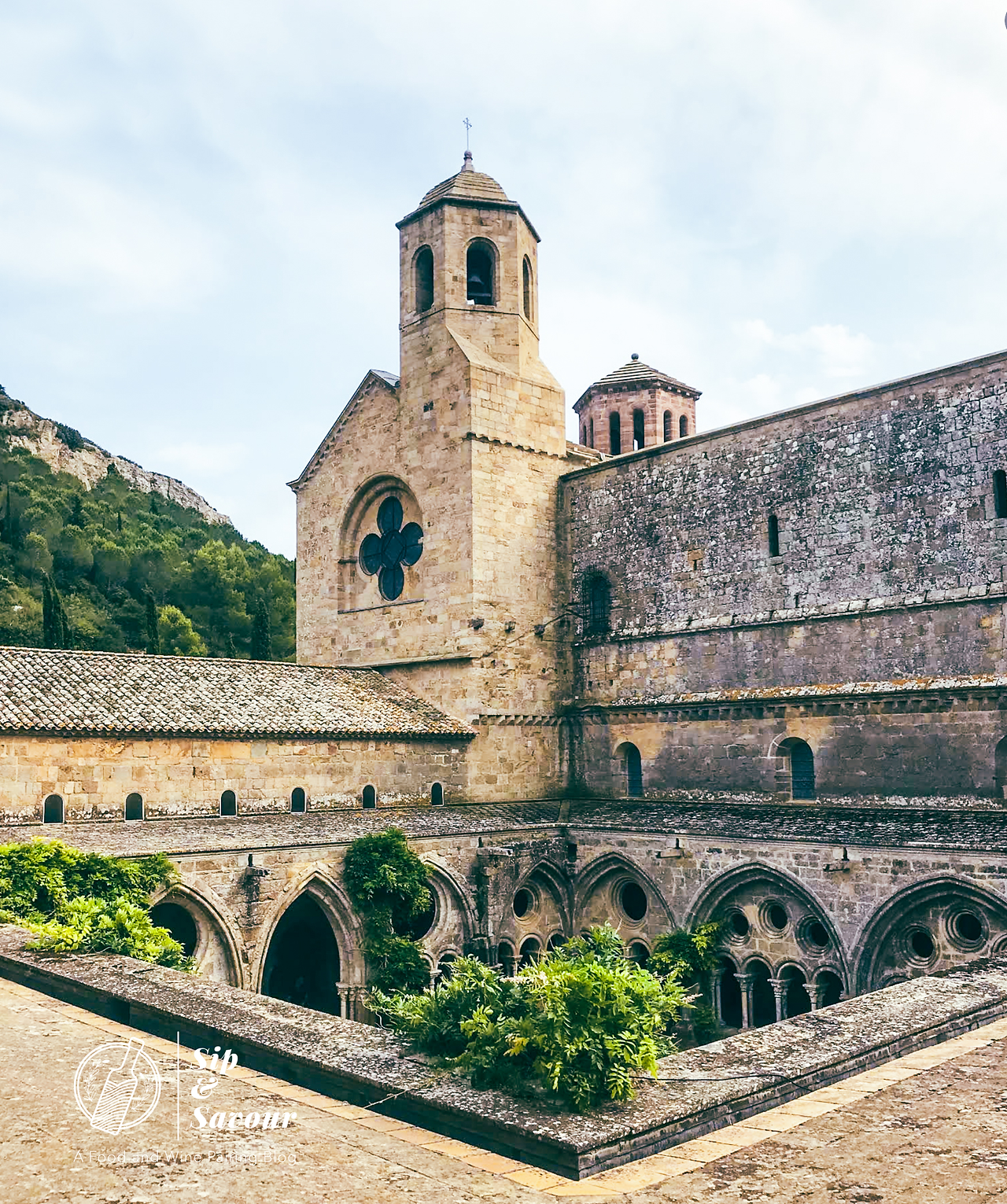
Abbaye de Saint-Hilaire, Limoux, France
The name itself is simple. Blanquette refers to the Mauzac grape, traditionally the backbone of the blend and nicknamed for the pale, slightly fuzzy underside of its leaves. De Limoux simply anchors it to its home: the small town where this style has been part of the landscape for centuries.

Blanquette de Limoux is produced in two main styles.
Under the AOC Blanquette de Limoux, it is made using the traditional method, with secondary fermentation in bottle and at least nine months ageing on lees, giving fine bubbles and a gently creamy texture. It requires at least 90% Mauzac, with Chenin Blanc and Chardonnay adding acidity and structure, resulting in a softer, fruit-driven sparkling wine often marked by green apple and pear notes.
Under the AOC Limoux Méthode Ancestrale, it is made from 100% Mauzac with a single fermentation that finishes in bottle, producing a slightly lower-alcohol, naturally off-dry sparkling wine that can appear lightly hazy.
The best part? It’s usually much more affordable than Champagne, often in the $20–$35 CAD range, making it one of the best-value traditional-method sparkling wines available. The style is rounder, fruitier, and less mineral-driven than many northern French crémants, making it ideal for relaxed drinking and casual gatherings.

For our Tarragon Chicken pairing, we went with Maison Rosier Blanquette de Limoux Brut, a sparkling wine that strikes a really nice balance between freshness, elegance, and value. It comes from the historic Limoux region in southern France and is made in the traditional method, mostly from Mauzac (about 90%), with a touch of Chenin Blanc and Chardonnay. That blend gives it those classic notes of crisp green apple, pear, citrus zest, and a hint of acacia flower. The bright acidity and fine bubbles work beautifully with the creamy, herbal richness of tarragon chicken, keeping each bite feeling light and refreshed.
Tarragon, with its distinct anise-like flavour, pairs exceptionally well with sparlking wine because the wine’s high acidity and bubbles cut through the herb's intensity and complement its subtle sweetness. The best pairings involve creamy textures, white meats, or seafood, which balance the aromatic nature of the herb.
What makes this Blanquette de Limoux so appealing is its easygoing character. It’s not heavy or overly complex, instead, it leans bright, fruit-forward, and just a little rustic in the best way, which makes it perfect for both a relaxed dinner at home or something a bit more special.
At roughly $25 a bottle, Maison Rosier delivers a lot of quality for the price and is a great reminder that you don’t need Champagne to get a genuinely enjoyable French sparkling wine.
Picked up at Metrovino.
Tarragon Chicken
Poulet à l’estragon, or Tarragon Chicken, is one of those French classics that manages to feel both a little bit fancy and completely down-to-earth. Dating back to the 18th century, it features tender chicken gently simmered in a creamy sauce infused with fresh tarragon’s subtle, almost anise-like flavour. The result is rich and comforting, but still refined enough. Served with rice, potatoes, or pasta, it turns an ordinary dinner into something that feels quietly special, with surprisingly little effort and a good bit of “ooh là là”.

What’s interesting is how far it travelled. By the 19th century, it had already made its way into English, German, and Russian kitchens, adapting along the way but never really losing its identity. In France, chefs like Escoffier refined it further with white wine, stock, and plenty of fresh tarragon, while abroad it became a kind of understated culinary ambassador: elegant, herbal, and unmistakably French in character. It even appears in Alexandre Dumas, described as part of a simple, almost ritual Thursday menu: nothing showy, just consistent, dependable excellence. And that’s really the charm of poulet à l’estragon - it doesn’t try to impress with complexity. It just does one thing exceptionally well, and has been doing exactly that for centuries.
Serves: 6–8 people | Prep time: 10 minutes Cook time: 50 minutes
Ingredients
one whole chicken cut into 10-12 pieces, or 4 chicken legs (4 drumsticks + 4 thighs)
4 shallots, finely chopped
4 garlic cloves, minced
2 sprigs/ 1 tablespoon fresh or dried tarragon 🌿
200 ml / ¾ cup dry white wine (or, if you picked up the Blanquette de Limoux, use that instead)
200 ml / ¾ cup heavy cream
30 ml / 2 tbsp olive oil
20 g/1.5 tbsp butter
Salt, to taste
Black pepper, to taste
🌿 Tip: Fresh vs dried tarragon
Fresh tarragon is always the best choice for this recipe if you can find it. It has a bright, delicate anise flavour that gently perfumes the sauce without overpowering it.
Dried tarragon can be used in a pinch, but the flavour is more muted and slightly more bitter.
Instructions

Cut the chicken legs in half so you end up with about 8 pieces.
If you’re starting with a whole chicken, just break it down into 10-12 pieces: 2 drumsticks, 2 thighs, 2 wings, and 4–6 breast pieces.
Finely chop the shallots and garlic and set them aside - you’ll want them ready to go once the chicken is browned.
Heat the butter and olive oil in a large Dutch oven or heavy-bottomed pot over medium-high heat. Once it’s hot, add the chicken and brown it for about 5–7 minutes, turning until it’s nicely golden on all sides. Don’t rush this step; that colour is where a lot of the flavour builds.
Next, add the shallots and garlic along with a pinch of salt. Cook for another 2–3 minutes, stirring often so nothing catches or burns.
Toss in the tarragon, then pour in the white wine. Use a wooden spoon to scrape up all the browned bits from the bottom of the pot, that’s pure flavour right there.
Cover and let it simmer gently for about 35-45 minutes over low to medium heat. Give it a stir once or twice as it cooks.
If there’s still a bit too much liquid at the end, just uncover the pot for the last 5 minutes to let it reduce slightly.
Finally, uncover the pan, stir in the cream, and warm it through gently — don’t let it boil. Finish with a good grind of black pepper and a few fresh French tarragon leaves for garnish, give it a final taste.

What to serve with tarragon chicken?
Keep it simple:
steamed rice, fresh tagliatelle, or boiled potatoes are perfect for soaking up the sauce.
Roasted vegetables also work beautifully depending on the season.
The real goal is just to have something to mop up the sauce.
What other wine goes with tarragon chicken?
While we paired our Tarragon Chicken with a Blanquette de Limoux, whose bright acidity and fine bubbles worked beautifully with the creamy sauce and fresh herbs, there are plenty of other wines that pair just as well with this classic dish.
A balanced oaked Chardonnay, especially something Burgundy-inspired, is a natural match for creamy tarragon sauces, bringing richness while still cutting through the fat.
Sauvignon Blanc, particularly Sancerre or Pouilly-Fumé, pairs brilliantly thanks to its herbal, grassy notes that echo the tarragon itself.
For roasted versions of the dish, aromatic whites like Viognier or a dry Alsace Pinot Gris offer enough body and texture to stand up to the chicken and tarragon butter.
Crisp whites such as Grüner Veltliner, Pinot Grigio, or dry Riesling also work well.
And for red wine drinkers, lighter styles like Alsace Pinot Noir or Beaujolais bring fresh fruit without overwhelming the dish.
Even a dry rosé from Provence can make a refreshing and surprisingly elegant pairing.
How to replace alcohol in the recipe?
If you’d rather skip the alcohol, don’t worry, the dish still works beautifully without it. Swap it out for a mix of chicken stock and a small splash of lemon juice. You still get that bit of acidity to cut through the richness of the cream and keep everything tasting fresh and balanced.
Happy sipping and savouring!

Comments