

A Taste of Easter in the Loire Valley
Updated: Aug 1

Easter is one of the most important celebrations in the Christian calendar- sometimes even more significant than Christmas, depending on where you are. For those of us who love food and wine, it's also one of the year's best excuses to gather around a table.
My own Easter memories begin in Hungary, where the holiday meant painted eggs, family lunches, and the wonderfully chaotic tradition of locsolkodás (Easter Monday sprinkling): boys and men would make the rounds armed with buckets of water - or, thankfully in later years, bottles of perfume - to sprinkle the girls in exchange for decorated eggs, sweets, or a small drink. Slightly inconvenient if you were on the receiving end, but unforgettable all the same.
At its heart, Easter commemorates the crucifixion and resurrection of Jesus, a story of sacrifice, hope, and renewal. Alongside those Christian traditions survive much older spring rituals celebrating fertility and new life. It's an unusual but beautiful coexistence, where the sacred and the folkloric come together to mark the end of winter and the beginning of a new season.
The holiday had its own comforting rhythm at home: carefully painted eggs, a house ready to welcome visitors, an early morning church service for those who observed it, and a table filled with dishes everyone looked forward to all year.
Whether you celebrate its religious significance or simply welcome the arrival of spring, Easter has always been a holiday centred on gathering, sharing good food, and enjoying the company of family and friends. Roast lamb, glazed ham, fresh spring vegetables, or even an indulgent truffle mac and cheese all feel like a well-earned reward after another long Canadian winter.
These days, my Easter celebrations are wonderfully simple: good food, good wine, and people I genuinely enjoy being around. That's reason enough to raise another glass.
Easter Classics and Their Ideal Wine Matches
Symbolism aside, Easter is also one of the year's great food holidays. Here are a few classic dishes and the wines that bring out their best.


Lamb
A traditional Easter centrepiece, especially roasted with garlic and rosemary, lamb pairs beautifully with Pinot Noir, Chianti, Northern Rhône Syrah, or - if you've been saving one - a mature Barolo.
Ham
Sweet, salty, and wonderfully indulgent, glazed ham shines alongside a dry or slightly off-dry Riesling or an aromatic Gewürztraminer.
Fish
Often served on Good Friday, fish pairs naturally with crisp whites such as Sauvignon Blanc or a mineral-driven Chablis.
Eggs
Devilled eggs, quiche, and other egg dishes are surprisingly good with a dry Brut sparkling wine.
Sparkling wine deserves a place on almost every Easter table. Its bright acidity and refreshing bubbles pair effortlessly with eggs, seafood, salads, creamy starters, and even glazed ham, making it one of the most versatile wines you can pour throughout the meal.
Whether you're observing centuries-old traditions or simply bringing family together over lunch, Easter offers the perfect opportunity to slow down, enjoy great company, and open something special.
Our Loire Valley Easter Menu: Pâté Berrichon and French Goat Cheese
I could have chosen any number of traditional Easter dishes, there’s certainly no shortage across Europe (or even here in Canada and other Catholic countries). But I landed on one from the Loire Valley in central France. Honestly, it’s mostly because of the wine (this is a wine blog, after all)… and, more broadly, because I have a soft spot for the region itself.

Pâté berrichon
The dish is pâté berrichon (pah-TAY beh-ree-SHON), a rustic Easter specialty from the historic Berry region. It's a savoury pie filled with seasoned pork and veal, wrapped in buttery puff pastry and baked with whole hard-boiled eggs running through the centre.
Rustic, comforting, and made for sharing.

France, naturally, adds its own charming twist. Every Easter Monday, the medieval town of Levroux hosts its famous Easter Fair, complete with a competition for the world's longest pâté berrichon.
Not the prettiest.
Not the tastiest.
Simply the longest.
The current record, set in 2024, stretches an impressive 25.3 metres. It's delightfully French, wonderfully eccentric, and impossible not to smile at.
Goat cheese

The Loire Valley is also considered the spiritual home of French goat cheese, with five AOP-protected varieties ranging from elegant ash-coated pyramids to classic logs. Young cheeses are creamy and delicate, while older examples become firmer, nuttier, and more complex, making them a perfect partner for rich pâté.
Authentic Loire cheeses can sometimes be found here in Calgary, although imports remain limited. Fortunately, Quebec produces outstanding goat cheeses with the same fresh, tangy character, making them an excellent local alternative. Half the fun is discovering something new at your favourite cheese shop.
Check out my favourite local cheese shops here.

Wine to Match Your Pâté and Cheese
This is where the Loire Valley really shines.
Pâté berrichon calls for wines with enough freshness to balance its buttery pastry and savoury filling. If goat cheese joins the plate - and I highly recommend that it does - the pairing naturally shifts toward Loire whites, whose lively acidity and minerality complement both the pâté and the cheese beautifully.
If you're serving only the pâté, lighter Loire reds work wonderfully:
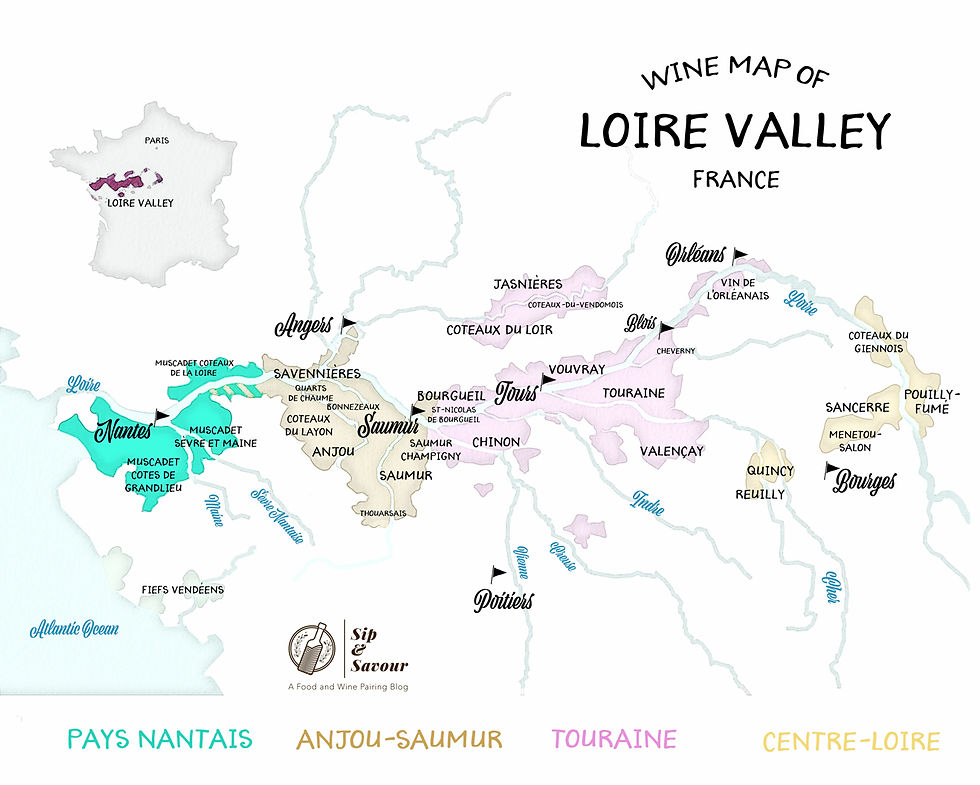
Touraine Gamay
Sancerre Pinot Noir
Saint-Nicolas-de-Bourgueil
Their bright fruit and moderate body complement the richness of the pie without overwhelming it.
If goat cheese is on the table, reach for one of these Loire whites:
Menetou-Salon — elegant Sauvignon Blanc with lovely floral aromatics.
Sancerre or Pouilly-Fumé — classic Sauvignon Blanc combining bright citrus, flinty minerality, and crisp acidity.
Vouvray — expressive Chenin Blanc offering texture and freshness.
Savennières — a more structured, complex dry Chenin Blanc that's worth seeking out for a special occasion.
If you're shopping on a budget, don't overlook Loire wines labelled IGP Val de Loire or even Vin de France. Many talented producers choose these designations to give themselves more freedom with grape varieties or winemaking styles, and the wines can offer outstanding value. A well-made Sauvignon Blanc or Chenin Blanc from these categories will still deliver the bright acidity and freshness that make the Loire such a natural partner for pâté and goat cheese.
Dreaming of the Loire
It's easy to understand why the Loire Valley has inspired artists for centuries. Between the winding river, vineyard-covered hills, medieval villages, and fairy-tale châteaux, it's a landscape made for long lunches and leisurely afternoons.
My ideal Easter would be spent in Levroux with a generous slice of pâté berrichon, far too much goat cheese, and a perfectly chilled glass of Sancerre. Add a little sunshine and nowhere else to be, and I'd happily stay all afternoon.
Perhaps one day retirement will make that dream possible. Until then, recreating a little Loire magic at home seems like a very good alternative.


Château de Chambord and Château de Chenonceau in the Loire Valley
A Glass of Sancerre
No Easter menu inspired by the Loire would be complete without mentioning Sancerre.
Perched on a hilltop in the eastern Loire Valley, this medieval town has been producing wine since Roman times, with generations of monks helping refine its vineyards long before Sauvignon Blanc became its global calling card.
Today, Sancerre is regarded as one of the world's benchmark expressions of Sauvignon Blanc. Its distinctive flinty soils produce wines that are vibrant, mineral, elegant, and remarkably food-friendly—especially alongside the region's celebrated goat cheeses.

Photo Sue Winston 

Vignerons la cave, Sancerre
Walking through Sancerre's cobbled streets with a glass in hand, overlooking rows of vineyards stretching toward the Loire River, it's easy to understand why this small corner of France has become one of the world's great wine destinations.
For me, Sancerre captures everything I love about the Loire Valley: history, craftsmanship, remarkable food, and wines that never shout but always leave an impression. It's the bottle I reach for most often at Easter, and one that always reminds me that the simplest meals, shared with good company, are usually the most memorable.
Sancerre is more than just a wine. It’s a taste of history, a sense of place, and the pure joie de vivre of the Loire Valley.
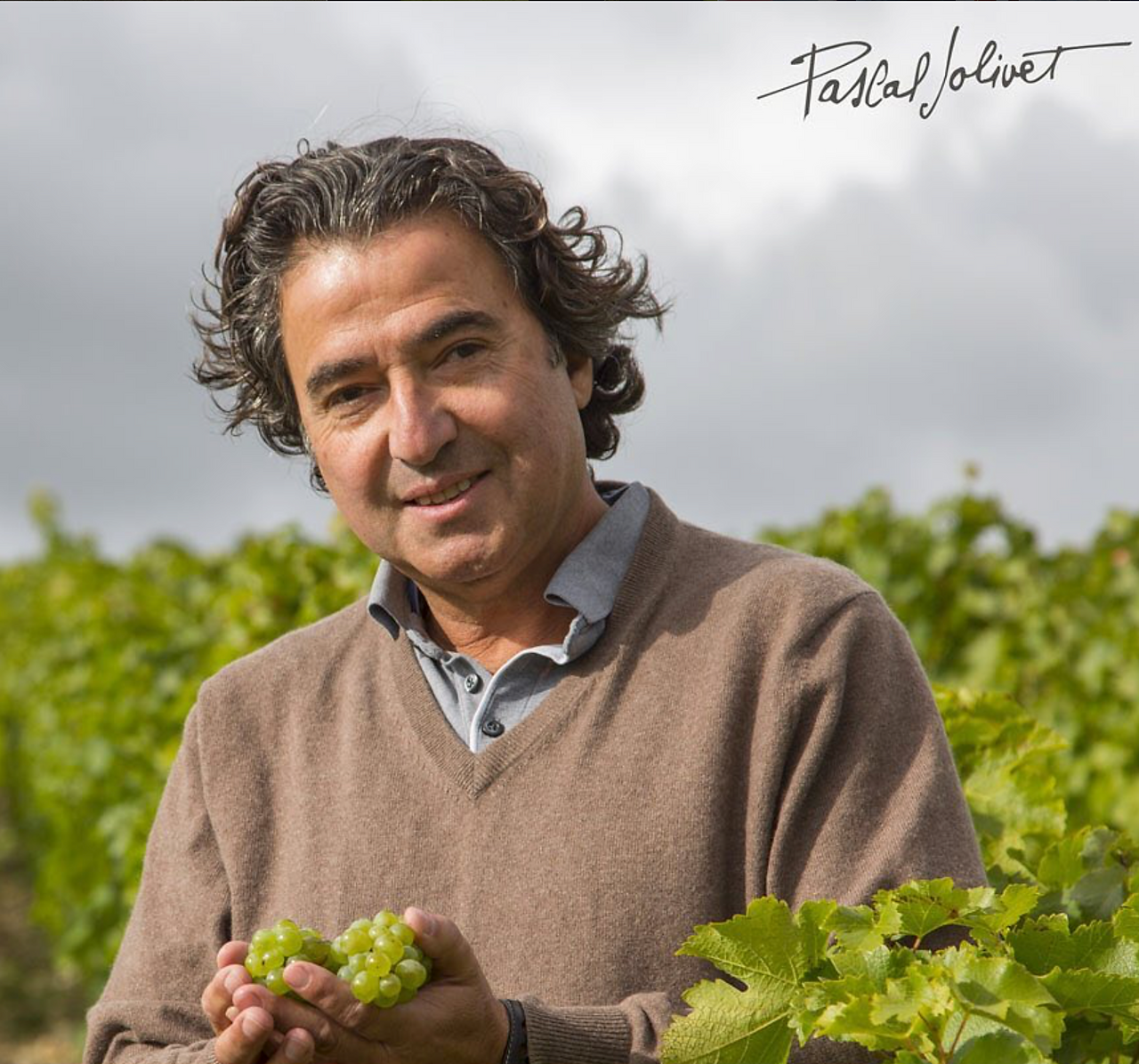
Pascal Jolivet Sancerre Blanc “Signature” 2024
For our Easter lunch, we choose a Sancerre white from winemaker Pascal Jolivet: fresh, bright, and just sharp enough to cut through a rich dish like this meat pie, especially when paired with our favourite Loire cheese.
Founded in 1987, Pascal Jolivet is one of the Loire Valley’s most respected producers, known for elegant wines that capture the true character of Sancerre and Pouilly-Fumé. Following a "natural vinification" approach (using indigenous yeasts and minimal intervention), the wines are defined by balance, freshness, and a strong sense of place.
That terroir comes from a mix of soils, from mineral-driven limestone to flint, which adds a subtle smoky edge. Today, with over 120 hectares of vineyards, the estate crafts wines that are precise, expressive, and quietly luxurious. Perfect for pairing with seasonal dishes and celebrating the flavours of spring.


Credit: maisonpascaljolivet

This bottle is the estate’s signature white, it offers bright, zesty flavours of white grapefruit, lime, and green apple, finishing crisp and flinty.
Grape Variety: 100% Sauvignon Blanc
Winemaking: Stainless steel vats
Tasting Notes: Elegant, feminine, perfectly balanced
Pairings: Aperitif, shellfish, raw and cooked fish
Serving Temperature: 10°C (50°F)
Aging Potential: Up to 10 years
Winery website: https://pascaljolivet.com/en/
Pâté Berrichon - French Easter Pie
Servings: 6 | Prep time: 30 min | Cook time: 40 min
Whether enjoyed warm or at room temperature, pâté berrichon is delightfully simple to prepare.
And the best part? Leftovers magically appear for the next day, unless, of course, your teenagers discover them first!

Ingredients
500 g / 1.1 lb minced pork, veal, sausage meat, or a mix
6 eggs: 4 hard-boiled, 1 raw for the filling, 1 raw for the egg wash
½ bunch parsley, chopped
2 shallots or 1 medium onion, finely chopped
1–2 garlic cloves, minced
2 sheets puff pastry
50 ml / 3 tbsp white wine (optional)
Salt, pepper, and nutmeg to taste
Instructions
Wash, drain, and chop the parsley. Peel and finely chop shallots/onion and garlic.
Boil 4 eggs until hard, peel, and set aside.
In a bowl, mix the meats with one raw egg, parsley, shallots/onion, garlic, wine, salt, pepper, and nutmeg.
Place half of the filling on the small rectangle of dough, leaving a 1.5 / 0.5" cm border all around
Arrange the four eggs lengthwise in the center of the filling
Brush edges with the remaining beaten egg, cover with the second sheet, seal, trim excess, and use scraps for decoration.
Brush the top with the egg wash and make two small holes / chimney in the centre.
Bake at 180°C / 350°F for 35-40 minutes.
Serve warm or at room temperature or even cold with a salad.

Unlike pâté berrichon, my native Hungary has its own version called Stefánia szelet, which is just as much of an Easter favourite. It skips the pastry entirely and instead comes as a baked, paprika-seasoned meatloaf made with ground pork, breadcrumbs, garlic, and pepper. Slice into it, though, and you’ll spot the same signature surprise: a neat line of boiled eggs running through the middle. Different style, same delightful eggy Easter surprise.
Cheers, and Happy Easter!


Comments