

The Rioja Cure for Cabin Fever
Rioja, Cheese, and the Art of Ignoring Canadian Winter
So Calgary has been officially buried under snow since early December, and at some point, somewhere between shovelling the driveway and attempting to liberate my mail from its frozen postal tomb, I began to wonder what, exactly, could spark a glimmer of joy in this frosty tundra.
Then the answer appeared, not dramatically, but sensibly. A small, civilised countermeasure to winter:
a Spanish Rioja tasting, paired with cheese.
Call it The Rioja Cure for Cabin Fever, or, if you prefer a gentler euphemism, a winter gathering featuring abundant snow, abundant Tempranillo, abundant cheese, and a frankly heroic level of seasonal denial.
And because I am both a committed wine enthusiast and a person with absolutely no chill, the tasting naturally demanded all four traditional ages of Rioja: Joven, Crianza, Reserva, Gran Reserva. Yes, the full Tempranillo metamorphosis, from youthful exuberance to dignified retirement. A complete Spanish life cycle in four glasses, designed to make the tundra outside feel almost… celebratory.
Naturally, the cheeses had to rise to the occasion. If we were going to discuss maturation, character development, and the occasional noble wrinkle, it seemed only fair that wine not carry the burden alone.
And so the plan evolved into a Rioja-and-cheese soirée, the kind of cozy, indulgent ritual that feels perfectly tailored to December in Calgary. After all, what better way to outwit winter than with a bottle, a cheese board, and the warm, smug satisfaction of refusing to engage with the weather at all?

Since four bottles is… objectively ambitious for two people, even with sturdy Canadian winter morale, we invited some friends over - strictly in the name of responsible consumption, naturally. Plus, nothing brings people out of hibernation faster than the promise of cheese and the illusion of Spain.
They arrived bundled like Arctic explorers, stomping off snow and shaking their heads at our collective life choices. But once everyone thawed out by the fire, Rioja in hand, the whole evening took on that magical Calgary winter coping mechanism glow.
We laid out the cheeses: sheep’s milk, cow’s milk, soft cheese, hard cheese, mild cheese, stinky cheese. Then matched them to each Rioja age like we were judging an international competition.
Somewhere around the second bottle, we became philosophers. Around the third, poets. By the fourth, true believers in the transcendent power of Spanish wine as a winter survival strategy.
Frankly, for a night, Calgary’s blizzard didn’t feel like a curse. It felt like a reason to gather, pour generously, and pretend we were in a candlelit bodega instead of a snow-buried Canadian suburb.
A 10/10 will repeat next cold front.

Let's talk about Spanish wine
Spanish wine has been enjoying a graceful renaissance since the mid-1970s, as the country entered a brighter, more open era and its vineyards quietly prepared for their own revival. With expanding economic opportunities and Spain’s entry into the European Union in 1986, winemakers began refining their craft with renewed purpose.
Credit: Mario La Pergola Credit: Thomas Vogel
By the 1990s, this transformation had gathered remarkable momentum, and today, Spanish wine continues its ascent with the kind of confidence and charm that feels almost legendary.
Rioja 101

Rioja is basically Spain’s wine royalty, first in line for fancy titles, adored by the masses, and aging way more gracefully than I manage on my best days. Perched along the Ebro River in North Central Spain, it was the very first region to snag the prestigious DOCa status, Spain’s top-tier wine accolade.
Sure, Rioja is famous for its Tempranillo-driven reds, the oaky, leathery reds, but it also dabbles in whites, rosés, and even sparkling wines.
I still remember back in the late 1990s, navigating life as a hopeful but very poor Eastern European student living in a wealthy and very expensive Western European country. With limited funds, my friends and I enjoyed our moments over humble but delightful table wines, usually found in 1-liter bottles priced between $2 and $4. Oh, and when we splurged on Rioja, it felt like a celebration, costing just under $10!

At that time, Rioja was just starting to make a name for itself in the European and international markets and was still surprisingly affordable, standing out from the everyday wines we usually enjoyed. Looking back, I feel incredibly fortunate to have savoured Rioja during its rise, not yet a fixture in upscale cellars or prominent on high-end restaurant menus. This experience not only shaped my palate but also taught me to appreciate the journey of great wines. It's exciting to see how far they’ve come since then, and I can't help but feel a sense of nostalgia and joy reflecting on those wonderful days.
The regions:
The Rioja wine region is split into three sub-zones, each with its own climate, soil, and very distinct personality.
Rioja Alta – Cool, classy, and a little high-altitude snobby. Elegant structure, bright acidity, and the kind of aging potential that would make a Bordeaux blush.
Rioja Alavesa – Similar vibe to Alta but fuller-bodied, with a bit of Basque swagger. Basically Alta’s more confident sibling.
Rioja Oriental – Warm, sunny, Mediterranean, and unapologetically ripe. Big fruit, bigger charm, occasionally bigger alcohol.
Now the grapes:
Tempranillo – El Super Estrella! Dominant, versatile, and truly the reason this entire party exists.
Garnacha, Graciano, Mazuelo – The backup singers who actually make the music better: fruit, spice, structure, drama.
Viura – The main white grape, crisp and citrusy, and criminally underrated.
Rioja DOCa is celebrated worldwide as one of Spain’s premier wine regions, often mentioned, sometimes over tapas, sometimes in the hushed chill of a cellar, alongside storied heavyweights like Bordeaux and Burgundy. While Bordeaux and Burgundy are revered for their precise terroir expression, meticulous vineyard practices, and single-minded stylistic focus, Rioja offers its own compelling allure: a rich expression of Spanish terroir, remarkable versatility, and excellent value, making wines that are both sophisticated and approachable.
Steeped in centuries of tradition, Rioja thrives on the global stage by seamlessly blending long-aging, classical techniques - hello, López de Heredia of Viña Tondonia - with modern, fruit-forward innovation. The result is a wine culture that honours history while embracing creativity, producing wines that are expressive, versatile, and endlessly engaging for both seasoned connoisseurs and curious newcomers alike.
And then there’s the part where Spain quietly shows off:
The aging system.
Spain essentially looked at the wine world and said, what if we did the aging for you? - and then made it law. In regions like Rioja and Ribera del Duero, terms like Crianza, Reserva, and Gran Reserva aren’t just romantic-sounding labels. They’re legally enforced guarantees that your wine has already spent serious time in oak and bottle before release.
Which means instead of buying a bottle and wondering if you should cellar it for five years (or accidentally opening it on a random Tuesday), Spain hands you something that’s already done the hard work: softened tannins, integrated oak, and those cozy, grown-up flavours like leather, tobacco, and dried fruit. It’s also why Spanish wines often feel like a bit of a loophole (especially when compared to other prestigious Old World regions known for long aging curves) offering age, complexity, and readiness without the long wait or the dramatic price tag. Patience is built into the system… so you don’t have to have any.
Part of what makes Rioja so distinctive is its structured aging system for red wines, divided into four main categories:
Genérico / Joven (little to no oak aging),
Crianza (minimum of 2 years, with at least 1 year spent in oak barrels),
Reserva (minimum of 3 years, with at least 1 year in oak barrels and at least 6 months in the bottle),
Gran Reserva (a minimum of 5 years, with at least 2 years in oak barrels and 2 years in the bottle).

Experimenting with cheese alongside Rioja red wines of every aging class is basically a delicious science experiment - and luckily, the only wrong answer is “not enough cheese”. As Rioja evolves from joven to gran reserva, its flavours deepen, soften, stretch out, and generally glow-up, creating fascinating (and sometimes surprising) pairings with everything from mellow manchego to funky, cave-aged wedges.
As a handy rule of thumb: older wines get along best with older cheeses.
Rioja's coming-of-age story, and we’re tasting every chapter
I knew, of course, that finding all the differently aged Riojas would be the easy part. The real challenge was always going to be the cheese. So I did the only sensible thing: I began by provisioning the Rioja family, neatly assembled and ready for their grand tasting debut.
Note: No need to panic. These bottles are all available in Alberta, but any respectable Rioja will do, Rioja doesn’t really do “bad”. Just follow the chart if you’d like to retrace my snowbound footsteps and try the full Rioja aging arc with cheeses.
Genérico/ Joven
The Flirt - bright, spontaneous, zero oak baggage
Señorío de Librares Joven 2023
Think of this as Rioja’s fun, hyper-social younger cousin, fresh, fruity, and absolutely unbothered by the concept of oak barrels. Made by the Espinosa sisters using organic, low-intervention magic, it bursts with juicy cherry, wild berries, a flirt of violets, and the kind of bright acidity that convinces you to pour a second glass before finishing the first.
Medium-bodied, smooth, and proudly Tempranillo-forward, it’s the perfect “I want something delicious, not complicated” wine, a Rioja in its sneakers instead of its dress shoes.
🧀 Top Cheese Matches

Young & Mild Cheeses: Soft goat cheese, young Manchego. Anything sweet, innocent, and not yet burdened by the weight of responsibility.
Semi-Cured Cheeses: These are the wine’s natural besties. A little salty, a little mature, but still fun at parties. Together they form a beautifully balanced, mildly chaotic duo.
Blue Cheeses: Shockingly, the producers claim this fresh-faced wine can stare down a blue cheese without flinching. Consider this pairing the “beauty & the beast” moment of your tasting.
Aged Cheeses (handle with care): These big, intense, philosophical cheeses usually prefer serious, brooding wines. But if you pick one that’s not too dramatic, the Joven can pull off a surprisingly cute opposites-attract situation.
In summary:
This lively little Rioja basically shows up to your cheese board wearing sunglasses and saying, “Don’t worry, I vibe with everyone” from baby cheeses to semi-cured classics—and can even charm a mild blue on a good day.
Crianza
The Sophisticated Drama Queen - polished, expressive, just enough oak to make a point

Bodegas LAN Crianza 2021
A polished, award-winning Tempranillo that spends a year in both French and American oak, because refinement is best done bilingually. Expect poised red-berry aromas with hints of vanilla and cinnamon, followed by a velvety, medium-bodied palate that ends in a confidently lingering finish.
LAN Crianza absolutely loves hanging out with cheese, especially the firm, salty, mature types. Think of it as that one friend who only dates people with "excellent aging potential".
🧀 Top Cheese Matches
Aged Manchego: The official, government-approved, born-in-the-same-region soulmate.
The French: Comté, Morbier, Mimolette and Southwest French Hard Sheep Cheeses, Crottin de Chavignol
The Swiss: Emmental, Gruyère
The Italian: Fontina
Any Smoked Cheese
Any Aged Cheddar
Aged Gouda
In summary:
LAN Crianza pairs best with cheeses that have grown into themselves, confident, structured, and just a little opinionated.
Reserva
The Quiet Power Player - composed, layered, effortlessly commanding
Marques de Murrieta Reserva 2021

A refined, Tempranillo-led Rioja that somehow manages to be elegant, structured, and charming without showing off, though its critics’ scores suggest it absolutely could. Expect cherries, plums, cedar, spices, and the occasional cameo of “powdered earth”, whatever that means, delivered with silky tannins and impeccable balance.
The Marqués de Murrieta Reserva 2021 is a well-dressed Rioja with standards. It pairs best with hard, aged cheeses, anything less serious need not apply.
🧀 Top Cheese Matches
Manchego: The obvious best friend.
The French: Mature Brie/Camembert: the creamy, earthy notes of a bloomy-rind cheese with some age can find a perfect partner in a Reserva, and Aged Goat Cheese (e.g., from Loire)
The Swiss: Gruyère and Emmental
The Italian: Parmigiano-Reggiano
Aged Cheddar
Aged Gouda
In summary:
Murrieta Reserva brings acidity, tannins, leather, spice, and dark fruit, basically the whole personality résumé. Hard cheeses counterbalance all that structure with fat, richness, and salty swagger. Everyone wins.
Gran Reserva
The Untouchable Icon - serene, complex, and entirely above the noise
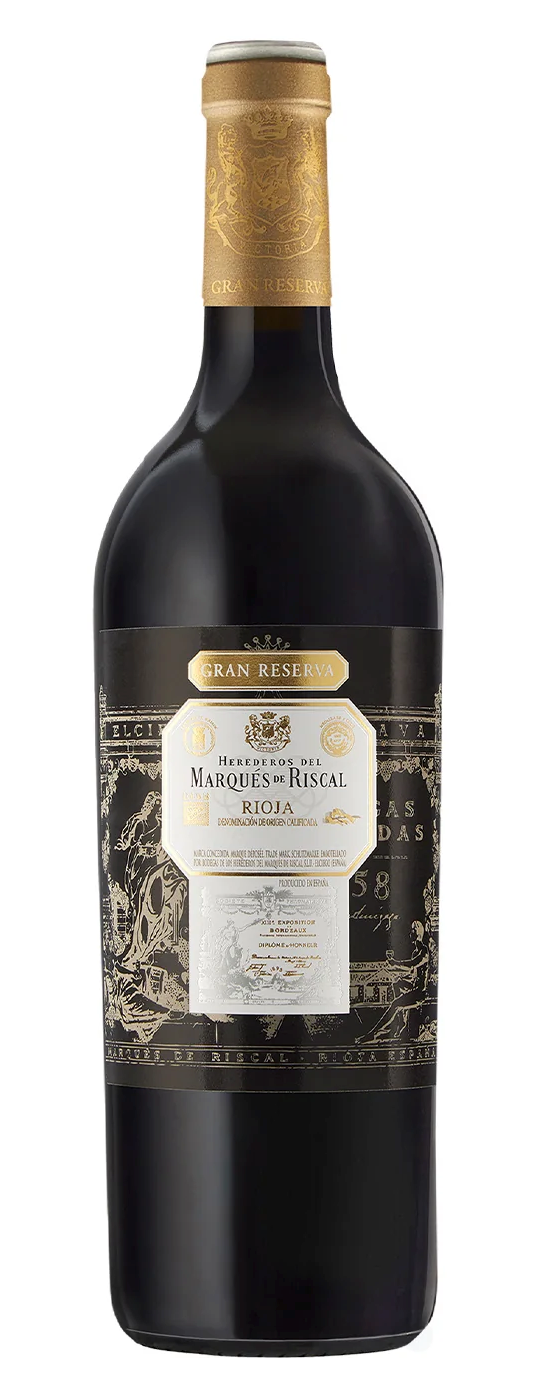
Marques De Riscal Rioja Gran Reserva 2018
A Very Fancy Power Couple
Marqués de Riscal Gran Reserva 2018 is rich, smooth, elegant, and just a tiny bit dramatic: plum, herbs, cocoa, oak spice, the whole Tempranillo opera. Naturally, it demands cheeses with dignity, maturity, and at least a decade of emotional stability.
🧀 Top Cheese Matches
Aged Manchego: The classic Spanish pairing.
Idiazabal: a hard sheep's milk cheese from the Basque and Navarre regions is buttery, firm, and slightly smoky.
Any other mature hard Spanish cheese
The French: Comté, Morbier (aged, hard cheeses) and Epoisses, Livarot, or Maroilles (bold yet soft, washed-rind cheeses)
The Italians: Aged Pecorino, Parmigiano-Reggiano, Grana Padano, Aged Asiago
In Summary:
A glamorous Rioja diva who only dates cheeses with backbone, preferably aged, salty, and sophisticated enough to keep up with all that Tempranillo drama.
Other Foods That Make Rioja Feel Fancy – Put These on the Cheese Board!
Cured ham (jamón): Because Rioja simply demands a partner with equal elegance.
Spanish Marcona almonds (or any almonds and nuts)
Olives (Manzanilla or Arbequina): Briny little gems that highlight Rioja’s savoury nuances.
Membrillo quince paste: Classic Spanish pairing; their sweetness goes beautifully with aged reds.
Roasted red peppers or piquillo peppers: Smoky, tender, and a touch indulgent.
Dried figs or apricots: Soft, sweet, and chewy, perfect for echoing the wine’s fruit-forward charm.
Where to Hunt and Gather Your Fromage in Calgary

This is where reality contributed its own plot twist. The Spanish cheese selection in my town is - how shall we say - enthusiastically intended, modestly delivered. Manchego? Certainly. Manchego again? Without hesitation. Manchego wearing a slightly altered label? Sí! Anything beyond that? Now you’re just being whimsical.
Well, Manchego, protected by a Protected Designation of Origin (PDO) status, is the iconic Spanish sheep’s milk cheese from La Mancha, the land of windmills, Don Quixote, and dairy with opinions. It’s buttery, nutty, a little sharp, and proudly wears its signature herringbone-patterned rind like a finely woven sheep sweater.
Perfect with jamón, olives, almonds, or just eaten over the sink while pretending to host a tapas night.
The Ages of Manchego
(Are we still talking about ageing, maturation, and wrinkles? Yes. Yes, we are.)
Semicurado: Young, soft-ish, and friendly.
Curado: Mature, nutty, and starting to develop opinions.
Viejo: Hard, crumbly, intense, basically the cheese equivalent of a wise old shepherd who’s seen some things.
Realizing that the classic pairings weren’t going to happen with Spanish cheeses alone, I took matters into my own (very insulated) mittens. I embarked on a cross-city cheese quest armed with determination, sturdy winter boots, and an arguably unreasonable longing for dairy-induced joy.
I returned triumphant with an international delegation of cheeses: French, Swiss, Italian, Canadian, and yes, a few Spanish representatives so they wouldn’t feel diplomatically snubbed.
And now the stage is set: four Riojas, a global cheese summit, and some deeply appreciative Calgarians doing their best to forget that winter!
Calgary’s Holy Trinity of Cheese Shops
(+ One Very Worthy Apostle)
A refined, slightly cheeky guide to the city’s finest fromage temples.
Peasant Cheese – Mission
📍 Mission (2206 4 St SW) and Kensington (1249 Kensington Rd NW)
The Mission boutique exudes old-world charm, the kind of place where time moves slowly and every cheese has a lineage. The mongers are quietly brilliant, guiding you through their 120+ impeccably kept selections with the calm authority of people who truly understand lactose on a spiritual level. Cuts are made to order, naturally, and the supporting cast, charcuterie, preserves, and fresh bread, feels curated for those who still believe in the art of grazing.
Peasant Cheese is my personal holy ground, the place I disappear into whenever I need something wonderful (or dangerously stinky). Crystal, the mastermind behind the counter, and her brilliant team somehow always know exactly what cheese I meant to ask for. They’re the reason my fridge is consistently more cultured than I am.
Say Cheese Fromagerie Inc.
📍 Crossroads Market
Inside the lively Crossroads Market sits this stylish little treasure trove, unpretentious yet impressively stocked, a place where connoisseurs and curious wanderers are equally welcome. The team is warm, knowledgeable, and delightfully willing to let you taste your way into trouble. The selection spans regions and styles with the confidence of a shop that knows great cheese needs no grandstanding.
I personally ravage the “discounted” cheese aisle on a regular basis, because there’s no such thing as expired cheese, only cheese with… character.
Springbank Cheese Co.
📍 Aspen Landing | Crowfoot | Willow Park Village
A Calgary institution with all the gravitas of a grand cheese hall. With more than 400 varieties sourced from near and far, Springbank is the city’s undisputed powerhouse of dairy abundance. Staff are generous with samples and pairing suggestions delivered with the easy charm of people who’ve guided many a shopper into blissful excess.
The Apostle of Cheese: Luc’s European Meats, Cheese & Eats
📍 Calgary Farmers Market (West and South locations) | Red Deer + seasonal markets!
Luc’s brings over 100 exceptional cheeses to the table, from classic European heavyweights (hello, Swiss imports) to beautifully crafted Alberta favourites. It’s equal parts deli, European corner shop, and cheese-lover playground. If Calgary’s Holy Trinity had a fourth seat, Luc’s would absolutely be sitting there, swirling a glass and munching on some good old cheese and charcuterie.
And Now… Calgary’s Supermarket Cheese Saints
Because sometimes enlightenment comes in the dairy aisle.
Italian Centre Shop! - my weekly pilgrimage site
The Italian Centre Shop isn’t a “supermarket” in the big-box sense - it’s an old-school European deli–grocery hybrid, the kind of place where the deli counter alone could reduce a fully grown foodie to tears.
📍9919 Fairmount Dr SE - my home base, but there are several others across Calgary and beyond.
It’s a reliable haven for Italian staples, excellent charcuterie, olives in alarming abundance, and a treasure trove of Spanish preserved delights, plus the kind of impulse buys you absolutely did not plan on but now cannot live without. (Yes, they even carry membrillo quince paste, see above.) The whole place feels like a loud, lovingly chaotic, family-run Italian marketplace, perpetually on the brink of something delicious.
And the cheese selection? They offer more than 300 varieties from over 20 countries, presided over by deli staff who cheerfully insist you sample everything. Expect Italian royalty, European classics, local heroes, and a few delightful wildcards (truffle cheese, port wine derby, the smoky ones, and the unsung Eastern European gems).
Lina's
And then there’s Lina’s—with several franchise-style locations across the city, bringing a more intimate, curated, old-world-deli energy to the Italian-shop scene. The cheese case is smaller than the sprawling empire of the Italian Centre Shop, but still wonderfully strong: classic Italian wheels, firm European favourites, and the occasional seasonal treasure. It’s less “continental marketplace”, more “delicatessen poetry”, a cozy little pocket of old-world Europe right here in Calgary.
Now the "real chains"
Save-On-Foods
A surprisingly civilized cheese situation. Their European case often includes nicely aged Spanish sheep’s milk cheeses, decent Comté, and French crowd-pleasers like Brie, chèvre logs, and the occasional stinky delight if you’re lucky. It’s basically a budget-friendly shortcut to looking like you “curated” something on purpose.
Also: my favourite supermarket on all fronts, for what it’s worth.
Real Canadian Superstore
Expect solid staples like Manchego, Ibérico, and a respectable trio of Swiss classics (Gruyère, Emmental, and Appenzeller). Their French section reliably yields usable Brie and Camembert, not life-changing, but perfectly capable of elevating a Tuesday.
Co-op
Often has a solid selection of basic European cheeses (Manchego, Gruyère, Emmental, Brie), plus some local cheese makers and seasonal specials.
Safeway
Their specialty cheese case usually includes a variety of domestic and imported options, especially basic aged cheddars, Swiss-style wheels, and sometimes Spanish and Italian imports.
Costco
I don’t shop at Costco these days, but I know they carry a surprisingly good lineup of reasonably priced import, think Manchego, Gruyère, and chèvre.
The Verdict: A Few Clear Winners in the Snow-Day Rioja & Cheese Showdown
After four bottles, a global delegation of cheeses, and enough Tempranillo-induced enlightenment to make even a medieval mystic nod approvingly, a few favourites rose decisively to the top.
(I swear I’m not playing favourites with goat cheese today. The cows deserve their turn to shine, and I’m behaving accordingly.)

Joven + Grey Owl = The Canadian Twist
"A Surprisingly Perfect Cross-continent Friendship"
Grey Owl - a succulent goat’s cheese, my favourite Canadian cheese from Quebec, once a staple of specialty shops and lately frustratingly scarce - this particular wedge was "smuggled in" from QC. Pairing it with a Joven is basically fruity optimism colliding with gothic dairy, and discovering they’re soulmates. The wine brings bright cherry, raspberry, and spice; the cheese adds creamy, lightly funky tang.
Tastes like: Rioja berries making fresh tracks across cold, tangy goat-milk slopes.

Crianza + Pecorino = The Italian Job
"The Perfect Heist"
This pairing doesn’t fall in love, it commits a very organized crime. Crianza, with its bright red fruit and gentle oak, works the room like a professional distraction: charming, smooth, asking just enough questions. Meanwhile, Pecorino Romano from Rome itself slips in as a hardened alleyway bandit, all hard sheep’s milk, sharp edges, and aggressively salty opinions, wearing the kind of poker face only centuries of successful crimes can teach. By the time anyone notices, the vault is empty and the cheese is gone, melting back into the cobblestones. They shouldn’t work together… which is exactly why they do.
Tastes like: a perfectly executed caper where the wine is innocent, the cheese is guilty, and no one dares file a report.

Reserva + Gruyère = The Swiss Classic
"The Most Neutral Yet Perfectly Balanced Alliance”
Reserva’s polished acidity and warm spice slot neatly into the caramel-nut richness of Alpine Gruyère with clockwork precision. Nothing clashes, nothing rushes, and everything knows exactly where it belongs. The pairing is refined, balanced, and calmly confident, the kind of harmony that doesn’t need to announce itself.
Tastes like: a chalet-side aperitif where the fire is perfectly calibrated, the cheese has impeccable credentials, and everyone owns very expensive sweaters and absolutely no chaos.

Gran Reserva + Manchego Curado =
¡Viva España!
“The Destiny Duo”
A pairing so natural it feels preordained. The Gran Reserva’s silky tobacco-and-spice depth wraps itself around the nutty, slightly assertive Manchego Curado like a prodigal hero returning home after a long pilgrimage through oak barrels, sun, and good decisions.
Everything clicks: sheep, Tempranillo, time, and terroir in perfect agreement.
Tastes like: Spain congratulating itself, pouring another glass, and reminding the rest of us, politely, but firmly, that this is what patience and pride taste like.
The Takeaway?

A blizzard outside, a fire inside, a few bottles of Rioja, a table full of cheeses, and some Calgarians realizing that winter feels a lot better when you let Tempranillo and cheese do the work.
If the weather wants drama, at least the wine can give you a happy ending.
Happy sipping and savouring!


Comments