

Exploring Cluny: A Summer Trip to the Jewel of Burgundy
Updated: May 3
Even in the height of summer - on a Saturday, no less - we somehow had the Beaujolais hills almost entirely to ourselves. It felt a bit like wandering through a department store after closing: quiet, slightly surreal, and oddly luxurious.
As we headed north on the Autoroute du Soleil, the mood only got better. While most people were crawling south toward the Côte d’Azur or Spain, we were gliding in the opposite direction. Hard not to feel just a little smug watching long lines of French, Dutch, and Belgian holiday traffic inch along while we sailed past.
Caveat lector: this blog is more than just about food and wine!

In addition to my love for wine, I have a deep passion for art and the history of art and architecture (especially old, very old ones) —so deep, in fact, that I hold a somewhat impractical degree in the field.
If you come across my posts about art from various wine regions (like the one below), I hope they pique your interest. But if they don’t? No hard feelings, I won't judge! While starting an art history blog is tempting, let’s be honest: the only thing scarcer than my writing would be my blog’s readership!
Cluny Abbey
I’ll admit, I wasn’t sure Sunday would be the most exciting day - we had planned a visit to Cluny Abbey, which, while a dream for medieval art history enthusiasts (guilty), doesn’t always scream lively outing.
But Cluny had other plans. We arrived to a town full of energy: Romanesque houses, narrow medieval streets, and just enough buzz to make it feel alive without being overwhelming.
The abbey itself more than lives up to the hype. Founded in 910 as a Benedictine monastery, Cluny once sat at the centre of a vast monastic network that stretched across Europe, with thousands of monks under its influence. At its height, the church was the largest in the Christian world, until St. Peter’s Basilica took over centuries later.
Not bad for a Sunday that I thought might be quiet.


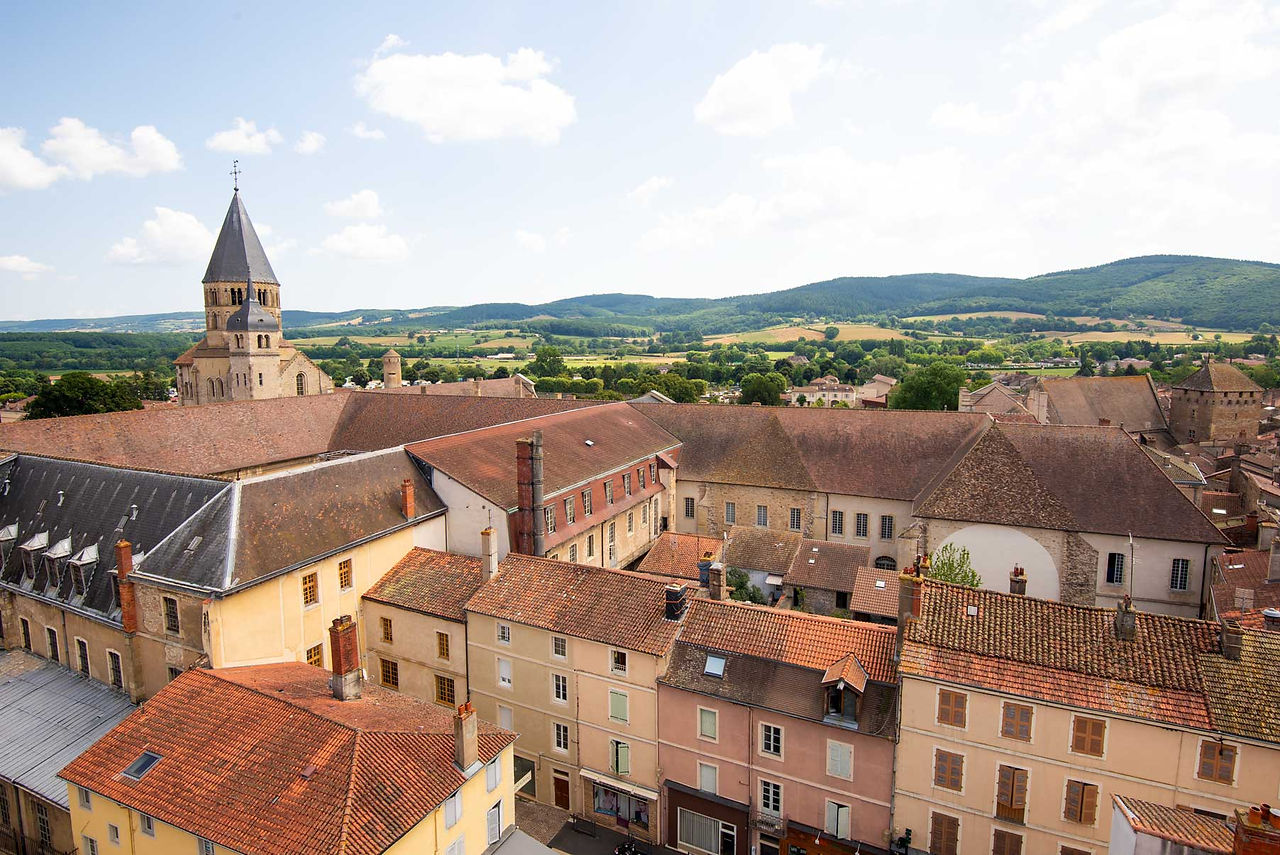
In the early 12th century, the order faced some challenges due to leadership changes. While the Papal Schism in the 14th century further strained the organization, it was the French Revolution that ultimately led to its suppression in France. The once-magnificent monastery at Cluny suffered partly from demolition, with its stones repurposed as a quarry until 1823.
However, there’s good news for visitors today! You can still admire the impressive remnants of one transept of the abbey church, along with the elegant 15th-century residential quarters for the abbots and the charming 18th-century convent buildings. Even in their present condition, these ruins speak to the abbey's former glory and scale.
I highly recommend climbing the 11th-century defensive tower attached to the abbey. Yes, it’s about 120 steps, and yes, you’ll question your life choices halfway up - but the view at the top more than makes up for it. You get a sweeping look over Cluny and the surrounding countryside that feels properly earned.
The tower is called La Tour des Fromages, literally, the “Cheese Tower”. It used to be known as La Tour des Fèves, or “Bean Tower”, which, let’s be honest, doesn’t have quite the same appeal.
The name change has nothing to do with medieval cheese worship, unfortunately. In the 19th century, a resourceful local woman repurposed the tower as a cheese-drying space, and just like that, its identity shifted from military defence to dairy production. A solid upgrade, if you ask me.
Today, it stands as a slightly unexpected tribute to cheese, less about guarding against invaders, more about celebrating the finer things in life. Because who needs beans when you can have brie?
Here are a couple of fantastic places you won’t want to miss:
Le Potin Gourmand Restaurant - 4 Pl. du Champ de Foire, 71250 Cluny, France
Nestled in a beautifully preserved 18th-century pottery workshop at the edge of the medieval town, this restaurant serves delightful classic Burgundy cuisine with a modern twist.
Au Plaisir Dit Vin - Wine Shop - 19 Rue Mercière, 71250 Cluny, France
With a knowledgeable staff eager to assist, you'll find an intriguing and high-quality selection of wines and spirits all tailored to fit every budget.
Happy sipping and savouring!


Comments