

It’s Vacherin Mont-d’Or Season! The Seasonal Swiss Cheese and Its Perfect Wine Pairings
Updated: Apr 18
👩🍳 - Jump to recipe, but fair warning: you’ll miss all my brilliantly unnecessary (and deeply entertaining) ranting.
High in the Vaud Alps, Switzerland’s easygoing, broad-shouldered cows spend their summers wandering through wildflower meadows, quietly transforming mountain herbs and hours of Alpine sunshine into the milk that makes Le Gruyère d’Alpage AOP*.
When autumn paints its first cool strokes across the ridges, everything changes. The cows leave the high pastures, and their milk becomes richer, denser, too luxurious for the large alpine wheels of Gruyère. That’s when another cheese takes the spotlight: Vacherin Mont-d’Or, the soft, spoonable winter specialty that Swiss cheese lovers await each year with the kind of excitement usually reserved for limited-edition treasures.
Elegant, fleeting, and a little theatrical, Vacherin appears only in the colder months, transforming chilly evenings into a ritual of warmth, aroma, and slow-melting indulgence.
*For cheese, the European Union’s Appellation d’Origine Protégée - AOP- is the same certification system used for wine.
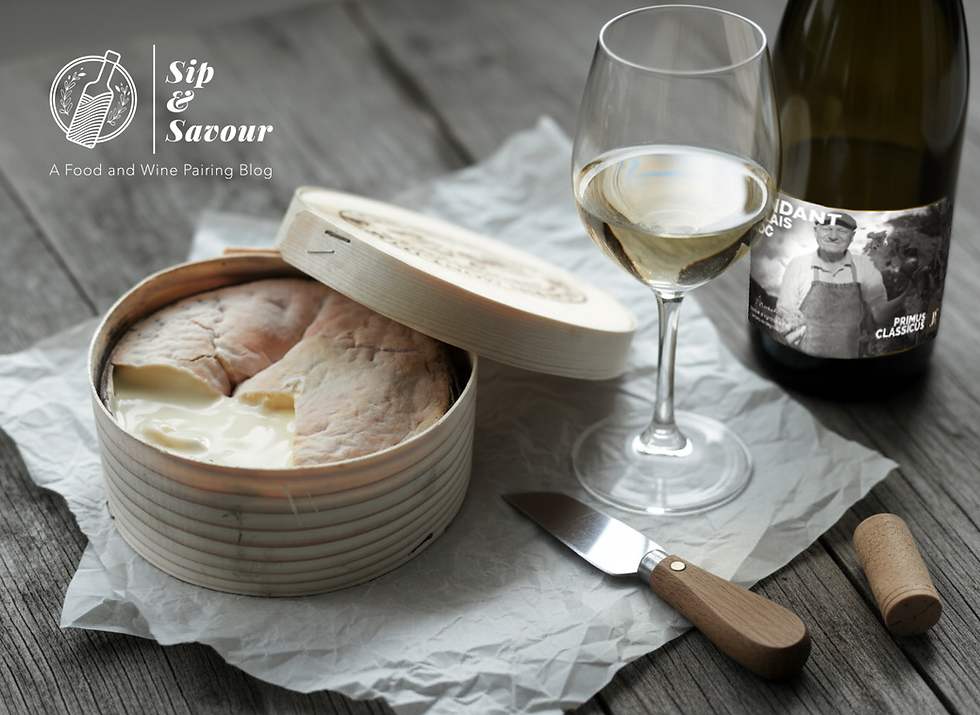
I lived in Switzerland, right in the Canton of Vaud, where this cheese is born, for nearly a decade, and in that time I picked up a pretty solid appreciation for the local dairy magic. I’m no official expert, but I am a devoted cheese enthusiast, and if I ever had to choose between cheese and… well, most other things, cheese would win with embarrassing ease.
And Vacherin Mont-d’Or? That wasn’t merely cheese. It was a seasonal ritual, a cultural countdown. Every autumn, the moment it reappeared on shop shelves, the Swiss didn’t just smiled (a noteworthy event on its own); they positively beamed.
In wine terms, it carried all the fanfare of Beaujolais Nouveau: that annual "It’s here!!" frenzy. Only instead of sprinting for the first bottle, everyone hurried toward a spruce-bound box of gloriously molten dairy.
So yes, I may have moved away, but Switzerland’s most eagerly awaited winter cheese still lives rent-free in my heart… and, if we’re being honest, almost certainly in my cholesterol.
One note: these seasonal superstars shouldn’t be confused with Le Gruyère AOP, one of the world’s most celebrated cheeses and essentially Switzerland in dairy form. It, too, takes its name from the medieval town of Gruyères - long considered one of the country’s great cheesemaking centres, where expertise has been honed and handed down for generations.

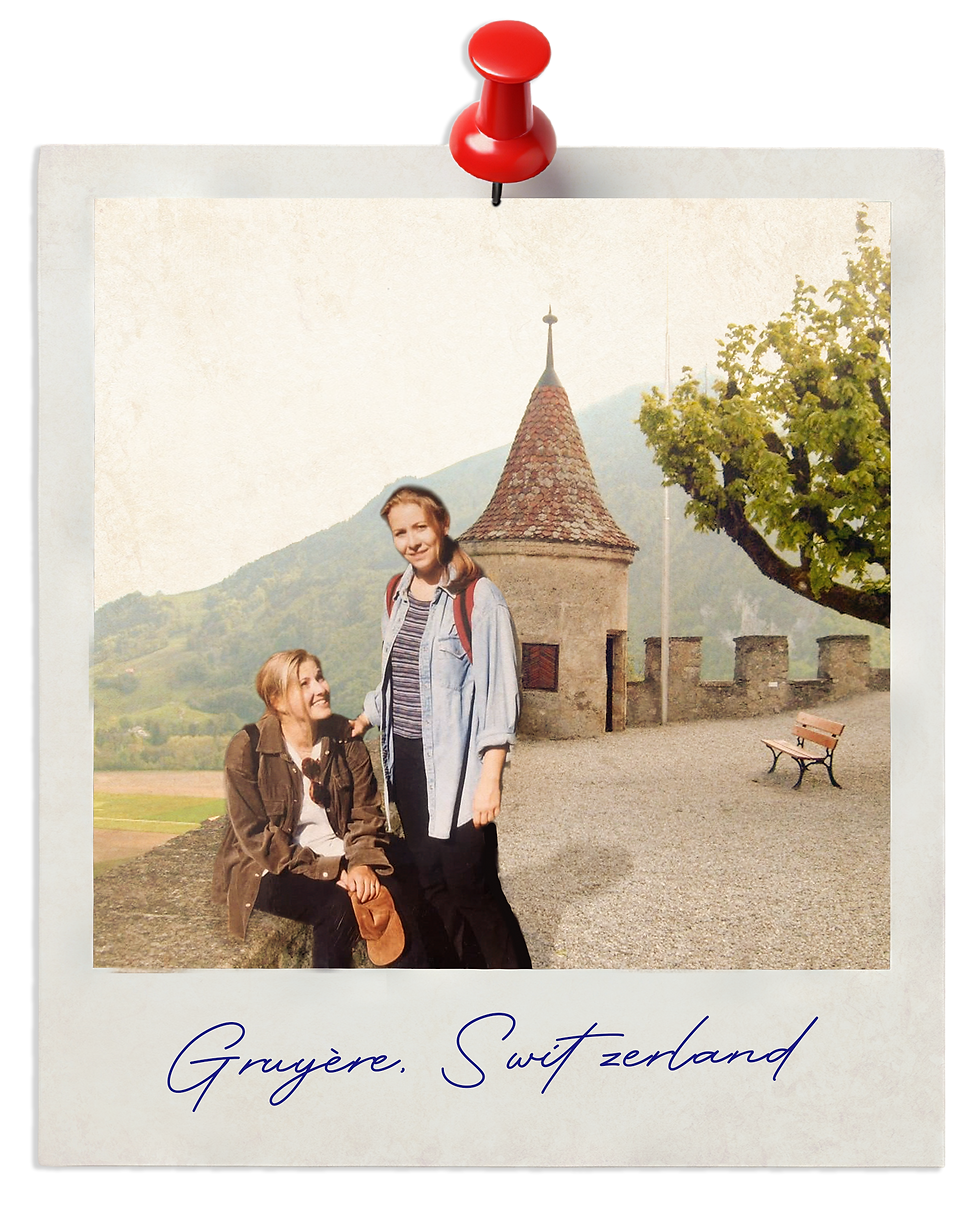
Speaking of Gruyère, here’s a fun little anecdote: I jokingly call myself an honorary Gruyèroise, and for a mildly ridiculous reason.
When my sister and I visited the region, we went for a stroll and somehow got mistaken for locals by a group of very enthusiastic Japanese tourists. They were absolutely convinced we were "authentic Swiss mountain women", even though we’re Hungarian and about as Alpine as a paprika plant. They insisted we pose in their photos.
So somewhere in Japan, several families have immaculate Swiss holiday albums featuring cows, emerald hillsides, and… two girls from Budapest smiling like we’ve just stepped off the packaging of an artisanal Swiss chocolate bar. Iconic, honestly!
A Brief (and Very Mysterious) History
https://www.vacherin-montdor.ch/lhistoire/ https://www.vacherin-montdor.ch/lhistoire/
Vacherin Mont-d’Or has been crafted in the Vallée de Joux for over a century, though no one can quite agree who invented it. One local tale claims a French soldier marched in during the Franco-Prussian War in 1871 and basically said, "Bonjour, here’s a recipe". This seems plausible since the French Jura next door makes a very similar cheese. But then-plot twist-evidence showed the Swiss were making it as early as 1812. So the mystery remains, and the cheese refuses to explain itself. France later shortened the name to "Mont d’Or", while Switzerland politely refused and kept the full, dignified "Vacherin Mont-d’Or".
So basically, Vacherin refers to a group of cheeses from both France and Switzerland.The key difference is that the French version, the Vacherin du Haut-Doubs is made with unpasteurized raw milk, while the Swiss version Vacherin Mont d'Or AOP is made with thermized milk (heated to 57–68 °C /135–154 °F for at least 15 seconds , this isn’t the same as pasteurization, since it doesn’t eliminate all harmful bacteria).
Also, not to be confused with Vacherin Fribourgeois, the firmer, year-round Swiss cheese that often sneaks into fondue pots.
Why it's seasonal?
In spring and summer, the cows are living their alpine dream: grazing on wildflowers, wandering sunny pastures, and producing plenty of milk for their calves. When autumn arrives, the calves are weaned and the milk supply naturally slows. What remains is richer, creamier, and no longer quite right for Gruyère d’Alpage, but perfect for the smaller, more indulgent vacherins (named after vache, the French word for "cow").
Even though modern dairy techniques could extend the season, Swiss regulations insist that Vacherin Mont-d’Or be made the traditional way: only in the cold months, only when the milk naturally changes. It’s this dedication to old-school methods that has earned it its AOP status, and the seasonal magic that makes it so special.
Production is strictly limited to August 15 through March 31, and Vacherin is only sold from September 10 to April - timed with Swiss precision. It’s the alphorn solo of seasonal cheeses: rare, unmistakable, and celebrated with wholehearted enthusiasm.
Photo credit: www.vacherin-montdor.ch Photo credit: www.vacherin-montdor.ch
Every year in Les Charbonnières, the proud birthplace of Vacherin Mont-d’Or AOP, the village comes alive with a celebration honouring both the returning cows and its famously oozy winter cheese. Around 6,000 visitors gather for this warmly spirited alpine fête, complete with artisan stalls, hands-on workshops, and alphorn players sending bright, echoing notes across the valley like Switzerland’s most polite loudspeakers. And, of course, the cheesemakers offer free tastings of the season’s first Vacherin. Because nothing brings a crowd together faster than mountains, music, and a spoonful of molten cheese before noon.
How it's made?

Vacherin Mont-d’Or AOP starts with heat-treated milk from cows that graze mostly on grass and hay. The milk is gently warmed, the curds are pressed, and then each cheese is wrapped in a spruce band, aka nature’s own corset. After a brine bath, the young cheeses rest on spruce boards for at least 17 days, being flipped, washed, and pampered along the way. Finally, each cheese is nestled into a deliberately slightly-too-small spruce box, so it develops those wiggly, wavy edges and picks up that signature woodsy flavour.
The end result is a soft, often gloriously runny cheese with a delicate salty note, a hint of whey, and the unmistakable aroma of spruce. It’s available whole in its iconic box or pre-sliced for those who like their cheese ready to dig into.
How to eat it?
Vacherin Mont-d’Or is a wonderfully versatile cheese, equally charming when enjoyed chilled with rustic bread and wine or when transformed into something warmly indulgent.
Its iconic preparation is the baked version, a wintertime favourite that delivers deep comfort with minimal preparation and almost no cleanup.

Baked Vacherin Mont-d’Or
Serves two very happy people
Ingredients:
500 g/1 lb small potatoes
Fresh herbs (thyme, rosemary, sage, whatever smells pleasantly foresty)
1 Vacherin Mont-d’Or AOP
100 ml white wine
Instructions:
Keep the cheese in its little spruce-wood box and wrap the whole thing in aluminum foil.
Use a fork to poke a few holes in the rind, then drizzle in the white wine.
Add the herbs-tuck in little sprigs or scatter finely chopped ones on top.
Bake in a preheated oven at 200°C / 390°F for about 25 minutes, until the cheese is irresistibly oozy.
Boil the potatoes while you wait.
Serve it fondue-style: dip the potatoes straight into the molten cheese, or tear into some good crusty bread. Both are correct choices.
Enjoy, ideally while pretending you’re snowed in somewhere in the Vaud Alps.
Now the wines!
Chasselas - Where Alpine purity meets effortless charm
Vacherin Mont-d’Or is a cheese with personality, and it deserves a wine that can hold its own. Ask any local in Vaud what should accompany this molten Alpine marvel, and they won’t hesitate: Chasselas. To them, it’s not just a pairing, it’s practically a regional law. Can't blame them, they’re right.
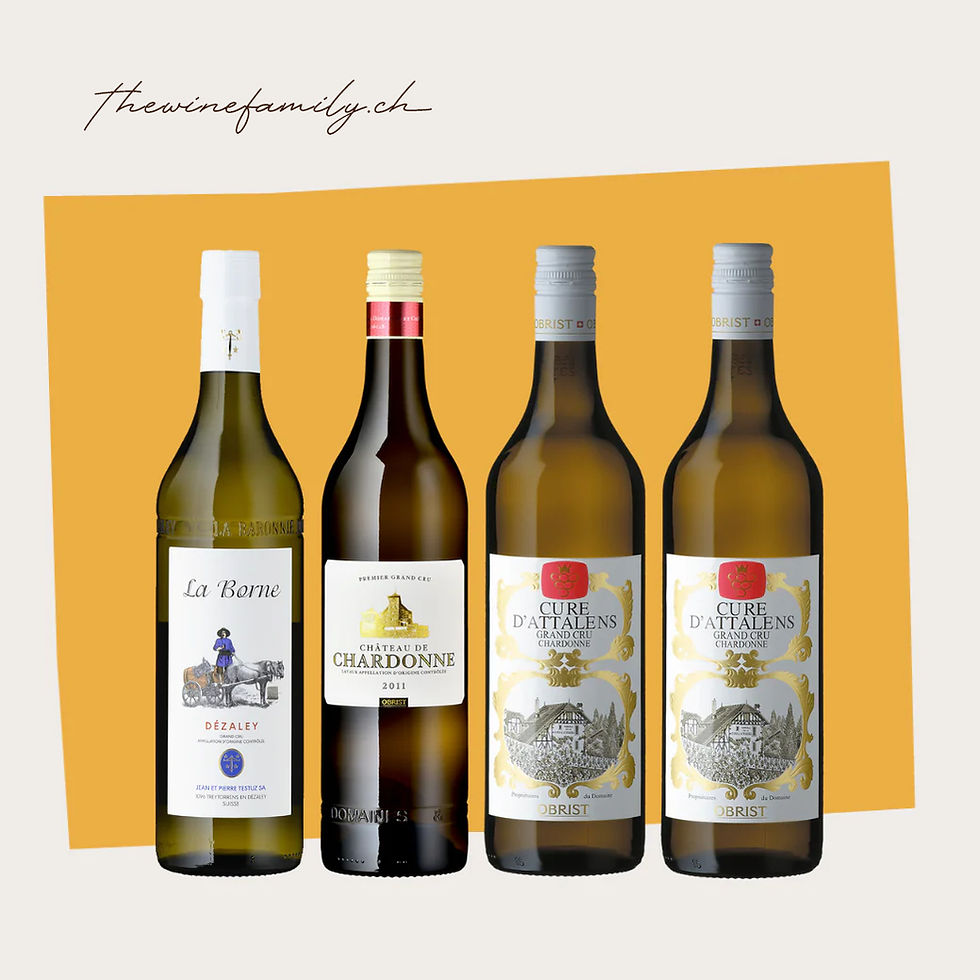
Chasselas, Switzerland’s most beloved white grape, is light, clean, and delightfully unfussy, making it the perfect companion for a cheese that arrives in a spruce box and immediately starts melting like it owns the room. Where Vacherin is rich, cozy, and woodsy, Chasselas is refreshing, clever, and balanced, supporting every decadent bite without ever demanding the spotlight.
Known by many names - Gutedel in Germany, Fendant in Valais, and How am I supposed to fit chocolate, cheese, AND wine in my suitcase?! for unsuspecting tourists - Chasselas is delicate and nuanced.
Expect whispers of apple, pear, citrus, gentle florals, and often a fine mineral streak shaped by Alpine soils. It’s a grape built for food: especially classic Swiss cheese dishes and local freshwater fish. Rooted in Swiss wine history since the 17th century, it thrives in cool climates and chalky soils, making it Switzerland’s most widespread white grape, particularly in Vaud, Valais, Geneva, and the Trois-Lacs region. Outside Switzerland, it’s also found in Germany, France, Chile, Brazil, New Zealand, and yes, even Canada.
Swiss wine regions: Lavaux, Chablais and Valais:
Photo by Oksana Bürki Photo by Frank Oosterbaan Photo by Fabrice Smet
In Canada, however, Swiss Chasselas can be surprisingly elusive. In Alberta, it feels almost mythological; even dedicated researchers of Swiss wines have trouble spotting it lately.
Thankfully, Canada has its own Chasselas chapter in the Okanagan Valley. St Hubertus & Oak Bay Estate Winery (Kelowna) produces the grape: bone-dry, crisp, and clean, with citrus and gentle grassy notes that make it wonderfully food-friendly. Founded in 1984 by Swiss-born Leo Gebert, the winery brought unmistakably Swiss winemaking sensibilities to the Okanagan.
That said, St. Hubertus is now part of Iconic Wineries of British Columbia - a premium Okanagan-based collective led by Mission Hill Family Estate - and its future identity, whether as a standalone winery or primarily a vineyard asset, remains a bit of a question mark.

Meanwhile, at Quails’ Gate (West Kelowna) Chasselas plays a starring role in one of their iconic Heirloom White blend, joined by Pinot Blanc and Pinot Gris.The wine is fresh and refined, with notes of lemon, pear, honeydew, and subtle florals, offering a smooth texture from aperitif to meal. According to the estate, the 2025 vintage will be released soon.
Now, if you can't get any Chasselas, try:
Aromatic whites : Muscat, Gewurztraminer, Viognier anything with a bit of perfume also get along famously with the cheese’s woodsy aroma. If you want something a touch more dramatic, an older dry Riesling or Semillon (the sort that’s been contemplating life for 15 to 20 years) brings smoky, layered notes that echo the cheese’s depth in a very civilized way.
Wines from Jura: Vin Jaune, Savagnin, or a Côtes du Jura Chardonnay have the kind of poised acidity that cuts through Vacherin’s richness while pretending not to notice how indulgent it is.
Champagne is always a reliable companion. Its crisp bubbles brighten the cheese, almost like someone sweeping open the curtains in a very opulent room. And if Champagne isn’t on hand, any good crémant or other sparkling wine will bring that same lively lift.
For red wine lovers, a gentle Gamay or Pinot Noir offers bright fruit without elbowing the cheese out of the spotlight.
Other beverages
Beers: Belgian ales and wheat beers pair nicely with Vacherin’s earthy character, they feel like friendly neighbours dropping by with good manners and better intentions.
Ciders: dry or lightly sweet ciders bring out the creamy, subtly woody notes, giving the whole experience a charming, orchard-in-late-autumn energy.
Vacherin Mont-d’Or pairs beautifully with non-alcoholic drinks that refresh the palate (acidic, sparkling, or bitter) or complement the cheese’s cozy, woodsy character of the cheese’s creamy, earthy richness.
– Sparkling apple or pear juice (a Champagne-like effect)
– Sparkling teas (rosé or blanc styles)
– Italian sodas or fruit spritzes
– Pomegranate juice for a tart contrast
– Herbal or black tea– Spiced apple cider
– Kombucha (bright, tangy, and bubbly)
– Non-alcoholic crisp whites
Happy sipping and savouring!


Comments