

Hermitage: One Hill, One Syrah, One Lamb
I’ve been thinking about Hermitage again. This usually happens around the same time I start thinking about lamb. Put the two on the table and I’m unlikely to ask for much else. Maybe roasted potatoes. Definitely.
Hermitage and Crozes-Hermitage are two of the Northern Rhône’s great wine appellations, centred around the small town of Tain-l’Hermitage, on the left bank of the Rhône.


The town sits at the foot of the Hermitage hill, with its steep terraces rising behind it. Cross the river, and you’re on the right bank, where Côte-Rôtie, Condrieu, Saint-Joseph and Cornas take over. It’s a remarkably small piece of France to contain so much wine history. And so much Syrah.
We knew this part of the Rhône well. We lived close enough to come to Tain-l’Hermitage often, usually with the kids. We’d wander through town, stop in wine cellars, climb the terraces. There was always something to look at, some bottle to discover.
There was also Valrhona, the world-renowned French chocolate maker founded in 1922. A very serious institution, obviously, and an excellent way to keep the children interested while their parents were busy with wine. Everyone had their priorities.
Getting there was part of the adventure. Tain sits on the Rhône, opposite Tournon-sur-Rhône, and the two towns are connected by a single road bridge. If there was an accident, you were going nowhere for a while. And given the French enthusiasm for motorcycles, overtaking and treating speed limits as loose suggestions, this was not entirely theoretical.


Tain-l’Hermitage Bridge | Chapelle Saint-Christophe and view from the Hermitage terraces | Caveau M. Chapoutier | Cité du Chocolat Valrhona
One very small hill
The remarkable thing about Hermitage is just how small it is.
Hermitage AOC covers roughly 130 hectares of vines, concentrated on one steep, south-facing hill above Tain. Crozes-Hermitage, by comparison, wraps around it in a much larger crescent of more than 1,700 hectares across eleven villages.
It is one little hill with a rather outsized reputation.
The steep south-facing slopes, varied soils and exposure help give Hermitage its concentration and structure. The reds are based on Syrah and can be deep, powerful and tannic, with the capacity to age for decades. The whites are made from Marsanne and Roussanne, and they can age beautifully too.
Crozes-Hermitage tends to be lighter, fresher and more approachable when young. It can offer excellent Northern Rhône Syrah at a fraction of the price of Hermitage, but it isn't Hermitage on sale.
That distinction matters. The two appellations share a neighbourhood and a grape, but they aren't interchangeable.
There is also the slightly odd question of the spelling. You may see Hermitage or Ermitage on a label. Ermitage was the older form, associated with the long-standing story of Gaspard de Sterimberg, the hermit who supposedly planted vines on the hill after returning from the Crusades. The history of how the H entered the picture is less tidy than the legend sometimes makes it sound, but Hermitage eventually became the standard spelling.
Syrah: the Rhône in red
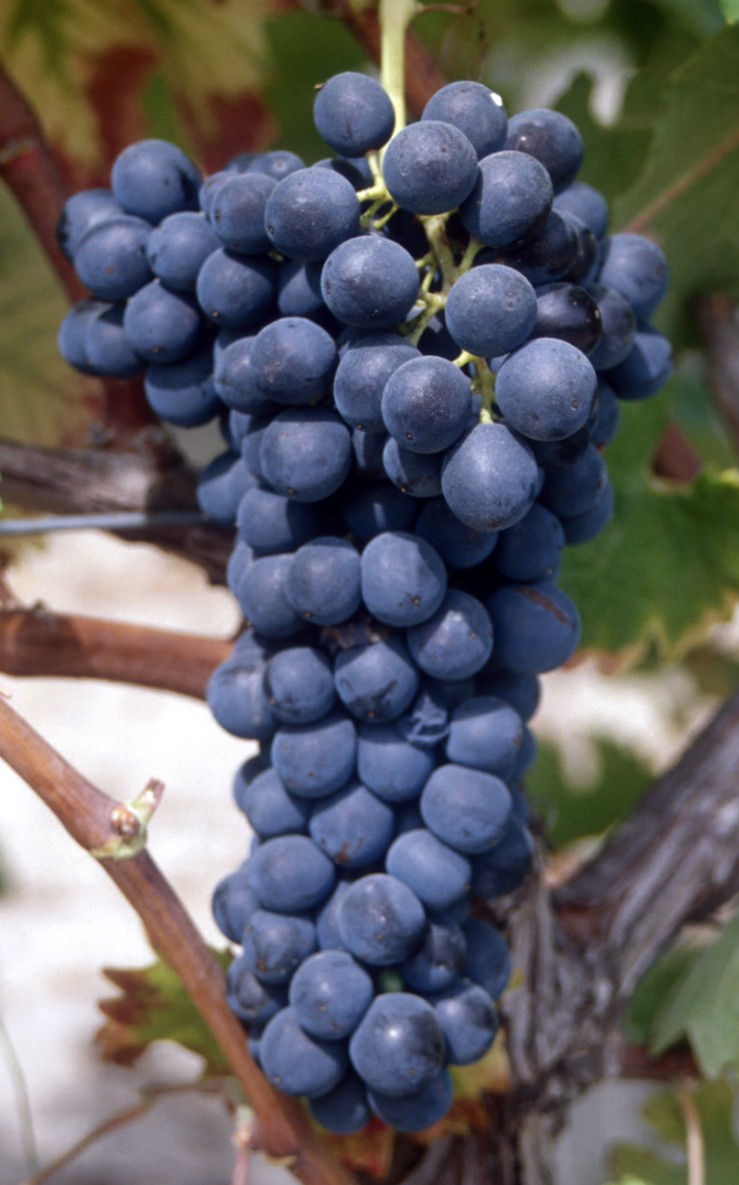
Syrah feels particularly at home here. The Northern Rhône is widely considered its ancestral home, and from here the grape travelled around the world, picking up different accents along the way.
You’ll often see Shiraz in Australia. Same grape, very different personality.
Northern Rhône Syrah tends to be savoury, peppery and fresh, with black and blue fruit held together by acidity and structured tannins. Violet, olive, leather, earth and that slightly iron-like character can appear as the wine develops.
Young Northern Rhône Syrah can have something wonderfully wild about it. Not untamed exactly, but definitely not interested in behaving like a fruit bomb.
And that is precisely what I want with lamb.
And then there is the price.
Hermitage isn't exactly a bargain wine. Finding a bottle under CA$100 takes some hunting, and the famous names can climb into the several-hundred-dollar range.
The vines clearly know what the neighbourhood is worth.
So when we opened a bottle that offered a way into the appellation without requiring a special occasion -or a small bank loan - I paid attention.
Domaine Jean-Louis Chave - Sélection Farconnet Hermitage, 2021

For a more accessible taste of the appellation, we reached for the 2021 J.L. Chave Sélection Farconnet Hermitage, made from 100% Syrah.
The Chave family has been making wine in the Northern Rhône since 1481, so they have had a little time to figure out what they’re doing.
The family’s Domaine Jean-Louis Chave Hermitage comes from historic estate vineyards, including celebrated parcels such as Bessards and Clos Florentin. The Sélection wines are a different proposition: a négociant range made from fruit sourced outside the domaine’s historic holdings, offering a more accessible expression of the Chave style and of Hermitage itself.
And “more accessible” doesn't mean stripped of personality.
The Farconnet still has the character I want from Hermitage: pepper, savoury spice, dark fruit, earth and that slightly mineral edge that makes Syrah so good with food. There is structure and plenty of depth, but it isn't all muscle and tannin. There is freshness underneath it, which is exactly what you want when dinner involves lamb, butter and a fairly serious amount of flavour.
What makes Farconnet particularly interesting is that the blend draws from three parts of the Hermitage hill: Diognières, Péléat and Greffieux.
And there it is again: one very small hill, several distinct vineyard sites, and Syrah behaving slightly differently depending on where it is planted.
This is part of the fun of Hermitage. You don't need a hundred vineyards spread across a huge region to find complexity. Sometimes one hill will do.
The lamb
If there is one thing I want with Hermitage, it is lamb.
Roast lamb, slow-roasted lamb, lamb shanks. I’m not particularly fussy about the cut as long as there is enough of that savoury, slightly gamey flavour for the Syrah to get its teeth into.
My favourite, though, is a rack of lamb.

It’s tender, cooks quickly, and somehow manages to look impressive without requiring much culinary heroics. There is also the small but undeniable pleasure of eating meat from a bone. We can dress it up with herbs and call it dinner, but the primitive part of the brain is still quietly delighted.
This is where the Hermitage earns its place. The lamb brings richness and savoury depth; the Syrah brings pepper, acidity, structure and enough earthy character to make the pairing feel almost inevitable.
And since I was already going to open the bottle, I might as well make the lamb worthy of it.
Herb-Crusted Rack of Lamb
This is one of those dishes that looks as though you spent all afternoon cooking when, in reality, you didn't.
A Frenched rack of lamb looks inherently fancy. Give it a quick sear, brush it with Dijon, press on a little herb crust and finish it in the oven.
That’s it.
About 30 minutes from start to finish, and it looks like a million bucks. Or, more accurately, about $80 a portion at today’s restaurant prices.
Suddenly the bottle of Hermitage seems like the economical part of dinner.

Serves: 2–3 | Prep time: 10 minutes | Cook time: 15–20 minutes | Resting time: 5 minutes
Ingredients
1 Frenched* rack of lamb, about 450–600 g (1–1¼ lb)
Salt and freshly ground black pepper
15 mL (1 tbsp) avocado oil or another neutral oil with a high smoke point
30 mL (2 tbsp) Dijon mustard
30–40 g (2–2½ tbsp) unsalted butter, softened
30 g (¼ cup) breadcrumbs or panko
30 mL (2 tbsp) finely chopped fresh herbs: parsley, thyme and / or rosemary
1–2 garlic cloves, finely minced
1 tsp (5 mL) lemon juice, optional
*A Frenched rack of lamb is a premium cut with the meat, fat and connective tissue trimmed away from the rib bones, leaving the bones clean and exposed for that classic, elegant presentation. Ask your butcher to do it for you, or, if you're feeling ambitious, do it yourself!
Instructions
Heat the oven to 200°C (400°F).
Season the lamb generously with salt and pepper on all sides.
Sear the lamb. Heat the oil in a large oven-safe frying pan over medium-high heat. Start with the fat side down and let it render for 2–3 minutes, until some of the fat has melted into the pan. Use the rendered lamb fat to sear the remaining sides, turning the rack as needed until nicely browned all over.
Make the crust. While the lamb is searing, mix the butter, breadcrumbs, herbs, garlic, lemon juice - if using, salt and pepper in a bowl.
Remove the lamb from the pan and brush the meaty, rounded side generously with Dijon mustard.
Press on the crust. Cover the mustard-coated side with the herb mixture, pressing gently so it adheres.
Finish in the oven. Return the lamb to the pan, crust side up, and roast for approximately 10–12 minutes for medium-rare. Because racks vary in size, start checking the internal temperature around the 10-minute mark.
For medium-rare, remove the lamb at about 52–54°C (125–130°F); it will continue to rise slightly as it rests.
Rest. Let the lamb rest for 5 minutes, loosely covered with foil. Then slice between the bones into individual chops.

And that's really it.
Serve with roasted potatoes, a simple green vegetable or a silky purée if you're leaning into the whole restaurant-at-home thing.
Then pour the Hermitage.
Happy sipping and savouring!
Comments