

The Roman Holiday That Started with Tripe
- Jul 13
- 7 min read
Updated: Jul 31
Our week in Rome revolved around three great Roman temptations: art, wine, and the daily dilemma of what to choose at the lunch and dinner table.
I had already shared the art and the wine (you can catch up on that little adventure here). This story is about the third temptation, and how, in the city that gave the world carbonara, I somehow ended up ordering tripe.
Before you wonder how someone could visit Rome and not immediately head for the pasta, let me explain.
Was I a fan of Roman cuisine? Absolutely. Was I swept away by Rome's legendary pasta dishes? Well... this is where things get complicated.
Pasta, the very symbol of Italian cooking, especially in Rome, has never been my great love.
I know. It's practically a confession.
In fact, I don't think I've ever shared a proper pasta recipe here. I probably cook pasta two or three times a year, which, according to my children, is my greatest failure as a mother (that, and the no-dog policy).
They grew up with surprisingly little pasta, a hardship they have enthusiastically compensated for as students living thousands of kilometres away from me.
Scusi! 🍝

So, eating like a Roman should have meant working my way through the holy quartet of Roman pastas: carbonara, amatriciana, cacio e pepe, and pasta alla gricia - the cacio e pepe cousin made even more indulgent with crispy guanciale.
And I did try. Sort of.
On our very first evening in the Eternal City, we had a reservation at one of Rome's excellent trattorias. While most visitors would probably have gone straight for one of those iconic pasta dishes, I opened the menu and immediately spotted something else:
Trippa alla Romana.
Yes, tripe.
I ordered it without hesitation.
It arrived exactly as it should: tender pieces of tripe simmered in a rich tomato sauce, generously finished with Pecorino Romano and fresh mint, accompanied by excellent crusty bread and a beautiful glass of wine to help me contemplate the fact that, only a few hours earlier, this had been part of a cow's digestive system. Sì!
Welcome to Rome.

Poldo e Gianna Osteria Trippa alla Romana at Poldo e Gianna Osteria Poldo e Gianna Osteria
Trippa alla Romana at Poldo e Gianna Osteria
The truth is, I loved exploring Roman cuisine and was simply more curious about the dishes beyond the famous pasta classics. Rome has a wonderful way of taking the cuts many people overlook and transforming them into dishes that are deeply connected to the city's history and traditions.
Now, that is much more my territory. I have never been intimidated by the less celebrated parts of the animal. Liver is probably my favourite, but I'm equally happy with gizzards, oxtail, and tongue.
My husband, however, has never quite shared my enthusiasm for these kinds of dishes, especially when tripe is involved.
The compromise was obvious.
He ordered the pasta.
I ordered the tripe.
Naturally, we both sampled each other's choices and, somewhat surprisingly (mostly to him), survived.
And those stolen forkfuls of carbonara and cacio e pepe? They confirmed what I had suspected all along: they really are delicious. I still wouldn't order a whole plate for myself, but I'm very grateful that someone at the table did.
So... What Exactly Is Tripe?

Let's address the elephant - or rather, the cow - in the room. Tripe is stomach. Yes, the edible lining of the stomach of farm animals, most commonly cows, but also sheep and pigs.
Cows, being complicated creatures, have four stomach chambers, and each one produces a different type of tripe with its own texture and personality. The flavour is surprisingly mild; it's the texture that steals the show. Think tender, slightly chewy, and exceptionally good at soaking up whatever delicious sauce or broth it's cooked in.
The best part is the honeycomb tripe: the part taken from the second stomach chamber, with a distinctive honeycomb pattern that's perfect for trapping rich sauces.
A small nutritional bonus: tripe is not only a dish with a long culinary history; it is also surprisingly nutritious. Beef tripe is low in calories while providing valuable nutrients, including vitamin B12, along with minerals such as zinc, selenium, calcium and phosphorus.
A quick search reveals well over 100 traditional tripe dishes around the world - from soups and stews to sausages, sandwiches and even grilled versions.
Mexico has menudo, the famous spicy soup often credited with curing everything from winter mornings to bad decisions the night before.
In Vietnam, thin slices of tripe are a classic addition to pho.
France has tripes à la mode de Caen, a traditional Normandy tripe stew, along with andouille and andouillette, its famous offal-based sausages.
Spain has callos a la madrileña, a rich Madrid-style tripe stew flavoured with chorizo and paprika.
Back home in Hungary, pacal is simmered in a rich paprika sauce - essentially a tripe paprikash.
Clearly, humanity has been very creative when it comes to cooking stomach.
Quinto Quarto: The Heart of Roman Cuisine
As mentioned, Rome's famous pasta quartet is only one part of the city's culinary story. Wander into almost any traditional trattoria and look a little further down the menu, and another tradition reveals itself - one built around quinto quarto, the "fifth quarter".
The term dates back to the old slaughterhouses of Testaccio - Rione XX of Rome, a historic working-class neighbourhood - where the finest cuts of meat went to the wealthy, while workers were often paid with everything else: tripe, oxtail, liver, heart, sweetbreads and other overlooked cuts. Faced with these humble ingredients, Roman cooks transformed necessity into some of the city's most enduring dishes.
That's the spirit of cucina povera ("poor kitchen"): waste nothing, cook slowly, and let simple ingredients shine.
Coda alla Vaccinara transforms humble oxtail into one of Rome's great comfort foods. Pajata, made with veal intestine, isn't for everyone, but it's among the city's most authentic dishes. In spring, Coratella con Carciofi pairs lamb offal with fresh artichokes, while Animelle prove that sweetbreads are far more delicious than their name suggests. And then there's Trippa alla Romana, the reason you've read this far.
Today, quinto quarto is no longer food born of necessity but one of the defining traditions of Roman cuisine. What began as resourcefulness became a philosophy of respect for ingredients, long before "nose-to-tail" cooking and sustainability became fashionable.
Tripe, Testaccio Rome, Credit: sipandsavour.blog Testaccio Rome, Credit: sipandsavour.blog
Testaccio Market, Rome
The Wonderful Wine We Drank with It
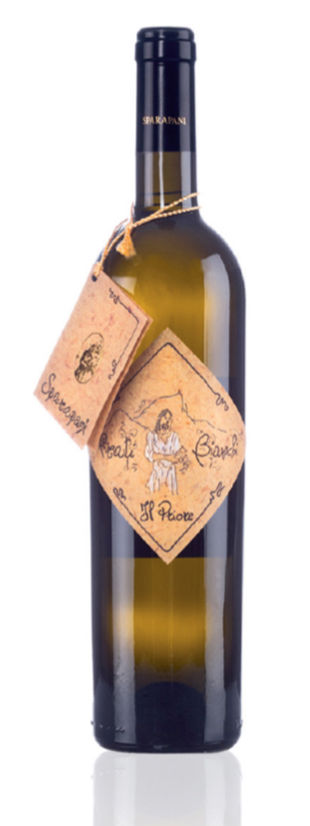
The danger of eating in Italy is that every course seems to come with a story and sometimes the wine wants one too. For our Roman dinner, we deliberately chose a wine from beyond the city limits. We had already explored the wines of Frascati, the beautiful wine region just outside Rome, so this time we followed our curiosity east to the Marche region and a 100% native Verdicchio.
It wasn't the obvious choice, but perhaps that was exactly what intrigued us. Our meal was already an eclectic mix of flavours, so we were looking for a wine versatile enough to keep up.
Il Priore – Castelli di Jesi Verdicchio Riserva DOCG Classico from Sparapani Frati Bianchi Winery comes from the hills of the Castelli di Jesi, where Verdicchio thrives on clay soils at around 400 metres above sea level. While the label may look like an Italian tongue twister, it's really just a precise description: a Riserva made entirely from Verdicchio, produced in the Classico zone, the historic heart of the Castelli di Jesi appellation and one of the region's finest areas. Hand-harvested grapes and careful ageing - 10 months in stainless steel followed by another 10 months in bottle - produce a wine with impressive depth while preserving the freshness and vibrant character that make Verdicchio so distinctive.
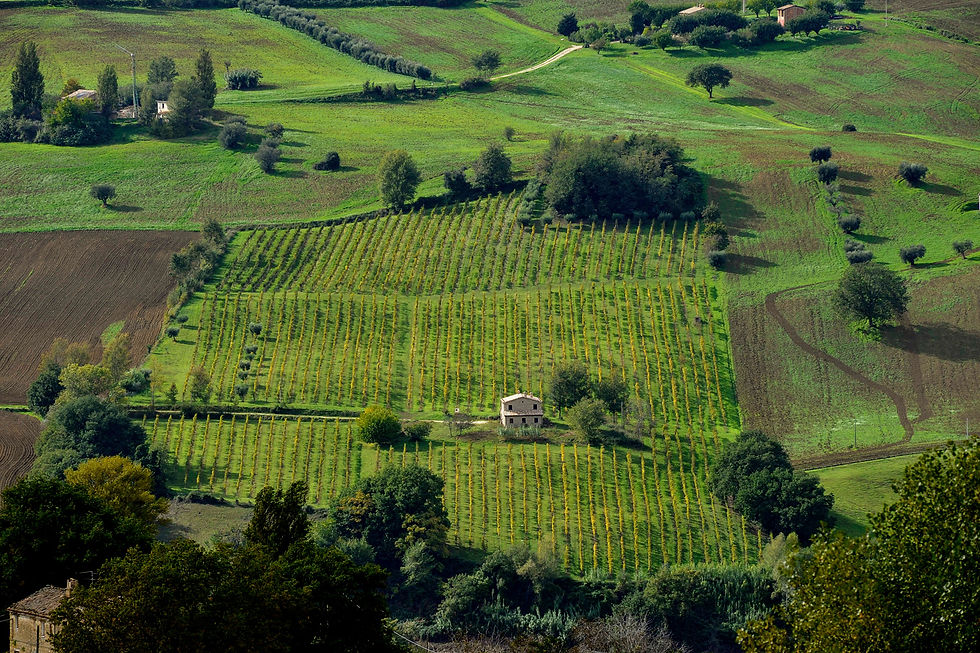
When the bottle arrived, I immediately noticed the label. Hand-drawn, it features the Prior of the ancient Frati Bianchi hermitage alongside the silhouette of Monte San Vicino, the mountain overlooking the Verdicchio-growing hills. More than just decoration, it feels like a small portrait of the landscape, history, and tradition captured inside the bottle.
Il Priore – Castelli di Jesi Verdicchio Riserva DOCG Classico form Sparapani Frati Bianchi Monte San Vicino, Marche, Italy
In the glass, the wine opens with inviting aromas of ripe yellow fruit, acacia blossom, and the subtle almond note that Verdicchio is so well known for. The palate is beautifully balanced, rich and textured without feeling heavy, with bright freshness and a distinct mineral edge that carries through to a long, savoury finish.
It proved to be a remarkably versatile wine, pairing beautifully with our rather eclectic menu: tripe and pasta alla gricia as our primi, followed by veal and cod for our secondi. Choosing a single bottle for an entire meal is always a bit of a balancing act. You scan the menu, look for the common thread between very different dishes, and hope the wine is as adaptable as you need it to be. Thankfully, this one rose to the occasion.
Tripa alla romana, Poldo e Gianna Osteria Pasta alla gricia, Poldo e Gianna Osteria Cod dish, Poldo e Gianna Osteria Veal dish, Poldo e Gianna Osteria
Our menu at Poldo e Gianna Osteria
The dessert, a traditional Roman crostata - a rustic ricotta tart with its signature lattice pastry, a dusting of icing sugar - and a traditional tiramisù called for something a little sweeter. The answer was a glass of Florio Marsala Superiore Riserva SR1909, a beautifully aged fortified wine from Sicily, made from Grillo grapes and matured in oak for over four years. Rich, warm, and gently nutty, it was the perfect way to bring a memorable Roman dinner to a close.
Crostata, Poldo e Gianna Osteria Florio Marsala Superiore Riserva SR1909, Poldo e Gianna Osteria Tiramisu, Poldo e Gianna Osteria
I won't include a recipe for Trippa alla Romana here because, unlike many of the dishes I write about, this isn't one I've felt the need to recreate at home. Some meals belong where you first discovered them, and this is one of mine.
Tripe isn't difficult to find in Canada. If curiosity gets the better of you, ask your butcher, find a good Roman recipe, and give it a try.
Who knows?
You may go to Rome dreaming of carbonara…
…and come home talking about tripe.
Happy sipping and savouring!

Comments