

Jura Uncorked: Earthy Wines, Rustic Cuisine
Despite what the name might suggest, Jura wines have nothing to do with dinosaurs wandering through vineyards. It’s easy to picture a sommelier carefully pouring a glass while trying not to trip over a passing sauropod, but the reality is a little less cinematic.
The name Jura comes from the Jura Mountains along the French–Swiss border and is thought to be of Celtic origin, likely referring to “forest” or “wooded hills”, which feels entirely fitting when you look at the landscape.

Dinosaurs do make a quiet appearance here, just not in the cellar. The region’s limestone formed when this was a warm, shallow sea during the Jurassic period, and it still holds plenty of fossils, including preserved footprints. The Jurassic period itself takes its name from these rocks. So yes, dinosaurs were here first… they just left footprints instead of tasting notes.
The Jura Wine Region, France

I once crossed the region with my family during summer holidays, expecting something a little more dramatic: misty valleys, folklore slipping in at the edges of the road, maybe even a perfectly timed apparition for atmosphere. The Jura, after all, has a reputation for that kind of thing: stories of a rogue river horse said to appear along the waterways, a jewel-bearing serpent that glides through springs and pools, and forest spirits who are more likely to be sensed than seen. We didn’t encounter any of them. Probably for the best. I had done a bit too much pre-trip reading on local legends.
What we found instead was far more grounded: a composed stretch of French countryside. Gentle hills, well-kept villages, and vineyards that clearly know exactly what they’re doing. Quiet, orderly, almost understated. The most dramatic moment of the day was a stop for a sandwich au thon.
That said, we did catch a quick glimpse of Château-Chalon from the autoroute, just long enough to think “that looks pretty on a hill” before driving on. My husband even pointed it out, saying, “That’s important”, while I nodded and carried on eating my saggy tuna sandwich, completely unaware we’d just passed one of the most revered names in French wine and the spiritual home of Vin Jaune.
Looking back, it feels a bit like accidentally waving at royalty while mid-bite.
That fleeting moment actually says a lot about the Jura itself. It’s modest in size - just over 2,000 hectares of vineyards folded into a landscape of folds and hills, but intensely distinctive.
The climate is continental, with long cold winters and warm summers. The vineyards cling to steep slopes where nothing comes easily. Vineyard work is demanding, erosion is a constant battle, and every bottle reflects that effort. You can taste the landscape in the wines: the Jurassic limestone and clay soils quietly shaping them year after year.

So what exactly makes Jura wines so unique?
In short: almost everything.
The grapes, the winemaking, even the flavour profiles don’t really follow the usual French playbook. That’s the point. Jura wines sit in that interesting space where the only real advice is: just try them.
The grapes
Jura grows familiar French varieties, but they behave differently here.
Chardonnay has been planted since the 14th century and now makes up roughly 40–45% of vineyards. Pinot Noir accounts for around 10–15%, producing everything from light, delicate reds to Crémant du Jura AOC, and even Macvin du Jura AOC, a fortified wine made by blending grape marc with unfermented juice.
But it’s the three indigenous grapes that define the region:
Savagnin (white): ~15–20%
Poulsard / Ploussard (red): ~10–15%
Trousseau (red): ~5–10%
Winemaking: two Jura philosophies This is where Jura really diverges.
Jura whites - Chardonnay and Savagnin - split into two styles:
Oxidative (“sous voile”) wines, including Vin Jaune
Non-oxidative (“ouillé”) wines, regularly topped up and kept fresh
That distinction defines almost everything that follows.
Sous voile wines (oxidative family)
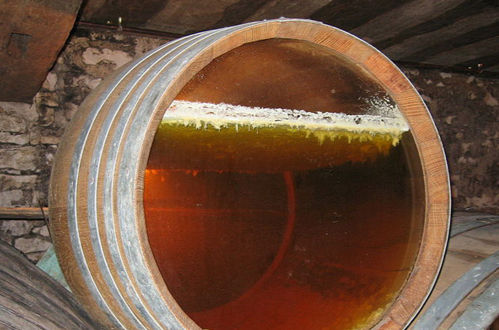
Vin Jaune is made from 100% Savagnin and aged for a minimum of six years and three months in barrel without topping up. During this time, a protective layer of yeast known as the voile forms on the surface, slowly influencing the wine while allowing a gentle, controlled oxidation.
The result is something unmistakable: nutty, saline, deeply structured, and naturally built for the table.
As it ages, evaporation concentrates the wine, which is why it is traditionally bottled in the distinctive 62 cl clavelin — the amount that remains from a litre after its long maturation.
Vin Jaune can age for decades under the right conditions, sometimes remarkably long, though claims of “over a century” belong more to exceptional outliers than to anything typical or expected.

At the top of the region sits Château-Chalon, a cru that produces only Vin Jaune in outstanding vintages under exceptionally strict conditions. If a wine does not meet those standards, it is not released as Château-Chalon and is instead typically declassified into broader appellations such as Côtes du Jura or, in some cases, Vin de France.
Even at these broader levels, the wines often carry the same unmistakable imprint of the Jura: savoury, structured, and shaped as much by patience and oxidative ageing as by the limestone soils beneath the vines.
Other Sous Voile Jura Wines
These are wines made in the same oxidative style as Vin Jaune, but aged for a shorter time. Since not every barrel is meant to age the full six years, producers sometimes bottle them earlier instead.
They still show that signature oxidative character, just without meeting the requirements to be labelled Vin Jaune. In some cases, a touch of Chardonnay is blended in during winemaking.
Ouillé wines (non-oxidative)
Blancs ouillés are regularly topped up to prevent oxidation, preserving freshness and clarity.
Made from Chardonnay and/or Savagnin, they lean toward crisp orchard fruit, minerality, and clean acidity, often with a subtle savoury edge from lees ageing.
There are also occasional skin-contact versions, usually from Savagnin, which add texture, citrus peel bitterness, and a slightly wild aromatic profile.
The reds: lighter, wilder, less predictable
Jura reds don’t aim for power.
Poulsard is pale, delicate, and quietly earthy, more suggestion than statement.
Trousseau is darker in tone and structure, with spice, wild berries, and a slightly rustic edge.
Pinot Noir sits between them, but even here it feels lighter and more lifted than its Burgundian counterpart.
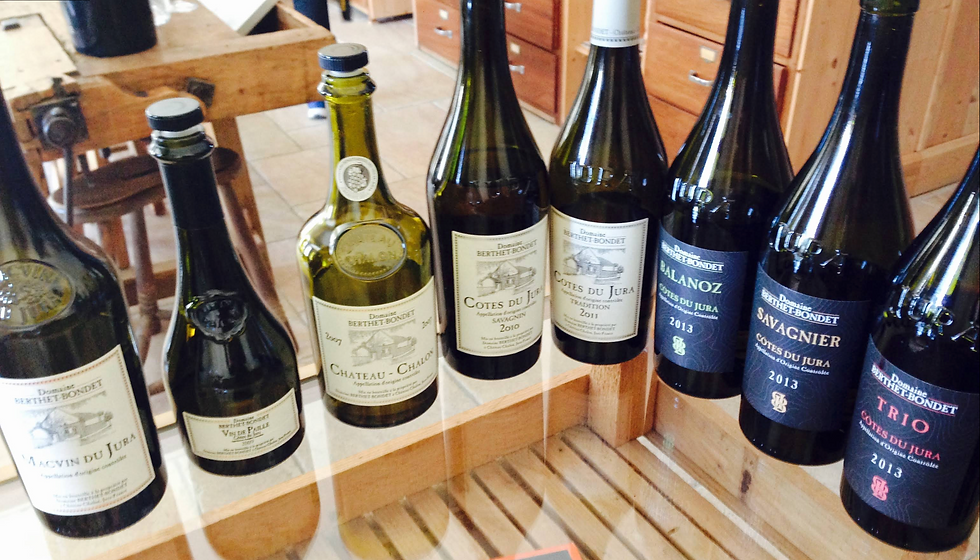
And then there’s the attitude.
Jura feels a bit like Burgundy’s more independent cousin: close enough to know the rules, but perfectly happy ignoring them. If you’re after predictable, this probably isn’t your region. But if you like wines with character, texture, and a bit of story behind them, Jura delivers.
You can usually find these through specialist importers like Metrovino in Calgary, which is a solid starting point if you’re exploring Jura wines locally.
A Jura-inspired menu
I’ve been putting together a Jura-inspired menu, anchored, bien sûr, by the region’s signature oxidative white. From there, it’s simple: a red for the cheese course, something sweet or sparkling to finish, and you’ve got an easy Jura-style dinner with very little fuss.
For apéro, Crémant du Jura works beautifully. Pair it with gougères if you’re feeling traditional, or even simple cheese twists from the grocery store are entirely acceptable behaviour.
Main: Poulet aux morilles

At the centre of it all is morel chicken, poulet aux morilles, the classic French version of chicken with morels. It’s one of those dishes that just knows what it’s doing: creamy, earthy, deeply comforting, and perfectly matched to the wine it’s often cooked with. The richness of the sauce, the depth of the mushrooms, and the structure of Vin Jaune come together in a way that feels entirely natural, as if they were always meant to share a plate.
If you’re feeling ambitious (and have the budget to match), you can go straight for Château-Chalon AOC, the only appellation dedicated exclusively to Vin Jaune and sitting at the top of the hierarchy.
If that feels like a leap, there are excellent alternatives that still capture the spirit of the region: Côtes du Jura AOC, Arbois AOC, or L’Étoile AOC. They’re generally more approachable in price but still deliver that signature Jura character, nutty, savoury, and a little wild in the best way.
We went for a more accessible option: Domaine Berthet-Bondet’s À Fleur de Voile.
A 100% Savagnin aged under a thin veil of yeast for 9 months to 3 years. It keeps the gentle oxidative Jura character without the full intensity of Vin Jaune - think hazelnut, dried herbs, citrus peel, and yellow orchard fruit, but with more freshness and lift. It’s precise and savoury rather than heavy, making it a great entry point into the style.
The domaine is a family-run organic estate in Château-Chalon producing highly regarded Côtes du Jura wines. This cuvée is often seen as a more approachable sibling to their serious Vin Jaune expressions, and the 2022 vintage is already drinking well, with plenty of potential to evolve further.
Cheese Course and Trousseau

For the cheese course? Yes, I’m absolutely a cheese-before-dessert kind of person. Honestly, if you’re only choosing one course, keep the cheese and lose the cake. Priorities.
We’ll be opening a bottle of red Trousseau, which is fantastic with younger, earthier cheeses and anything involving charcuterie.
But if you still have some of the white left, try that too! Jura whites and aged Alpine cheeses are one of those combinations that just make ridiculous amounts of sense together.
This particular bottle comes from Fruitière Vinicole d’Arbois, one of France’s oldest wine cooperatives.
It’s a medium-bodied Jura red with bright acidity, a beautiful ruby colour, and aromas of strawberry and raspberry, with just a faint hint of bell pepper underneath. There’s also that earthy, slightly rustic edge that makes Jura wines so charming. From everything I’ve read, it’s smooth, elegant, and nicely balanced, the kind of wine that feels made for a proper cheese board but would be just as good lingering in your glass as the evening winds down.
To go alongside the Jura white and /or the Trousseau, a proper cheese course feels non-negotiable. Comté and Morbier and Mont d'Or are the obvious choices.

Comté is nutty, slightly firm, and made in the same region, which already gives it a head start. It mirrors the wine’s savoury depth without overpowering it.
Morbier, with its signature black line through the middle, is said to have originated with thrifty Jura farmers who covered leftover evening curds with a layer of ash before adding fresh morning milk. Today, the ash is purely traditional, but it remains the cheese’s most iconic feature.
I’ll likely add a few others into the mix as well, something with a bit of creaminess for contrast, like a Camembert or a Brie, a firmer blue … but don’t be shy, use what you have in your fridge (maybe not the Laughing Cow, but hey, no judgment, we’ve all been there).
Dessert: Bring on the Sweet and Bubbly Wines of Jura
If you can get your hands on a vin de paille, don’t hesitate, just go for it. This is Jura’s gloriously indulgent "straw wine", made by drying grapes on straw mats before pressing them into something that genuinely tastes like liquid gold. It always shows up in small 375 ml bottles, and sits at 14% ABV.
It pairs best with equally rich desserts like apricot or fig tarts, apple crumble, caramel treats, and nutty pastries such as walnut cake or macarons. It also works nicely with crème brûlée, vanilla custard, or even dark chocolate desserts.
Serve it well chilled, around 7–8°C.
Then there’s macvin du Jura, a sweet fortified wine, sits at 16-20% ABV. Locals usually drink it as an apéritif, though it also works nicely at the end of a meal. Though it’s usually not quite sweet enough to pair comfortably with most desserts, it goes well with some vanilla, walnut, caramel ice cream. Just pour a little Macvin over the top - instantly impressive, minimal effort.
Crémant du Jura is the region’s sparkling wine, and it really shines with light, fruity desserts or anything with a soft creamy texture. Think apple tarte tatin, pear tarts, berry sorbets, or a classic vanilla millefeuille. Cream puffs and custard-based pastries work beautifully too, with the bubbles cutting through the richness.
Dry brut styles are great with sweeter pastries, while demi-sec pairs better with fruit-forward desserts. Even darker chocolate desserts can work in moderation, thanks to the wine’s freshness and acidity.
Chicken with Morels - Poulet aux morilles
This dish is rooted in the Ain region (where the southern edge of the Jura range dips into the department), and by the 19th century, cooks were already pairing morels with local poultry in creamy, wine-laced sauces that feel both rustic and quietly luxurious… and, thankfully, easier than it sounds.
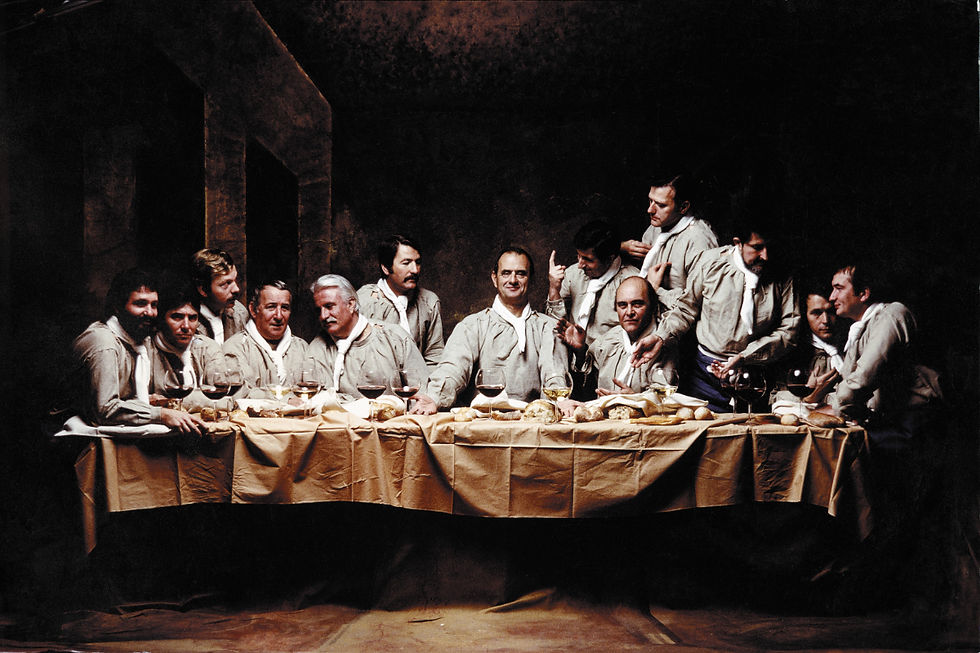
This recipe is based on the original by Paul Bocuse. If the name doesn’t immediately ring a bell, think of him as one of the chefs who helped define modern French cuisine.
He was a true icon of French gastronomy. In fact, he even appeared in Francis Giacobetti’s famous 1979 photograph “Cène de chefs” (Chefs’ Last Supper), a playful reinterpretation of Leonardo da Vinci’s The Last Supper, with leading French chefs taking the place of the biblical figures. Bocuse sits in the central role, mirroring Christ - how blasphemous! - a nod to just how central he was to French cuisine. The Bocuse d’Or - one of the most prestigious cooking competitions in the world, held every two years in Lyon - was named in his honour. With that kind of legacy, it’s no surprise he remains a benchmark for French cuisine.
But back to the dish.
Unlike traditional methods, here, the poultry is not browned in fat but gently poached directly in an aromatic broth, which gives it incomparable tenderness.
The other difference from Mr. Bocuse’s recipe is that he replaces the Vin Jaune with Noilly Prat. I’ll leave it up to you. I had Noilly Prat on hand, and since it is cheaper than the Jura wine, I used that and drank the wine with the chicken.
Dried morels are often preferred, as drying intensifies and concentrates their flavour. Bocuse famously used exceptional Bresse chicken, though any good-quality chicken will work well.

Serves: 8 | Prep time: 35 minutes | Cook time: 1 hour 30 minutes
Ingredients
1 whole chicken, about 1.8 kg / 4 lb, cut into 8 pieces
30 g dried morels (about 1 oz)
100 ml / ⅓–½ cup Madeira wine***
1½-2 chicken stock cubes
100 g / 1 cup sliced button mushrooms
4 small shallots
2 tarragon strings
500 ml / 2 cups white wine / vin jaune / Noilly Prat vermouth
20 g / 1½ tbsp softened butter
8 g / 1 tbsp flour
500 g / 2 cups thick crème fraîche or whipping cream (33-35%)
*** Note on alcohol & substitutions
Madeira wine is used in the original recipe for a reason, it brings a distinctive nutty, slightly caramelized sweetness that adds real depth to the sauce.
Madeira is a fortified wine from Portugal’s Madeira Islands, known for being heated and oxidised during production, which makes it incredibly stable and long-lived.
It ranges from very dry to very sweet, with styles like Sercial (dry), Verdelho (medium-dry), Bual (medium-sweet), and Malmsey (sweet).
For classic dishes like Paul Bocuse’s Poulet aux Morilles, a medium-dry to medium style works best in cooking, adding depth and concentration to the sauce when reduced.
That said, you’ve got options if you don’t have it on hand (or prefer something else). Each option will shift the flavour slightly, but the goal is the same: keep that rich, layered, slightly nutty backbone in the sauce.
Best alcoholic substitutes (use a 1:1 ratio):
Dry Marsala (Sicily, Italy) – the closest match; similar richness and gentle sweetness
Dry Sherry (Andalusia, Spain) – Oloroso or Amontillado – great depth, slightly more savoury
Dry Vermouth – such as Noilly Prat (France) – lighter and less sweet, but still works nicely in a reduced sauce
And no, there’s no need to overspend here, this is home cooking, not a fine-dining tasting menu. That said, if you also want to enjoy these fortified wines as an apéritif, digestifs, in cocktails, it’s worth picking up a couple of decent bottles.
Non-alcoholic option:
This is the version often online - I haven’t tried it, so please on’t blame me if it’s not perfect.
Use a mix of good-quality chicken stock + a splash of white wine vinegar or apple cider vinegar (about 1–2 tsp per ½ cup / 125 ml) to mimic acidity and balance. You can also add a tiny drizzle of maple syrup or honey to round it out.
Instructions
Prepare the morels
Place the dried morels in a bowl, cover with hot water, and let them soak for 30 minutes.
Drain well - save the liquid, filtered, for the sauce - and pat dry, cut the larger ones in half.
Pour the Madeira into a saucepan and reduce it completely.
Add the morels and ½ a stock cube.
Cover with water and cook uncovered over medium heat for 40 minutes.
Prepare the chicken and aromatics
Season the flesh side of the chicken pieces with salt.
Trim the button mushrooms and slice the caps.
Peel and slice the shallots. Rinse and dry the tarragon.
Pour 250 ml / 1 cup of water into a large pot with the 500 ml / ½ cup white wine (or vin jaune or Noilly Prat vermouth).
Add the tarragon, shallots, mushrooms, and the stock cube. Bring to a boil over high heat.
Add the chicken pieces and cook uncovered for 15 minutes. Remove the breast pieces and set aside.
Continue cooking the darker cuts (drumsticks and thighs) for another 20 minutes.
Make sure the liquid reaches the level of the chicken; add a little water if needed.
(If the breast cooks too long, it dries out - this is why it’s removed earlier than the bone-in pieces.)
Finish the sauce
Make the beurre manié: Work the butter until very soft, then mix in the flour to form a smooth paste
Remove the darker chicken pieces and discard the tarragon. Cook the liquid until all the water has evaporated and you hear a sharp sizzling sound, leaving only the fat in the pan.
Add the beurre manié, then immediately stir in the cream. Cook for about 5 minutes, stirring.
Return the chicken to the pot, turning it in the sauce, and let it warm through for another 5 minutes. Check for doneness.
Add the morels to the pot. Cook for an additional 5-10 minutes.
Serve immediately - preferably with something that can soak up the sauce, such as fresh tagliatelle, spaetzle, rice pilaf, or homemade mashed potatoes. For a more refined touch, opt for tender or lightly crisp vegetables such as green beans.
Happy sipping and savouring!


Comments